Choosing the right mix concrete is not simply a matter of selecting the highest strength. Global buyers must match concrete performance with climate, construction method, delivery distance, and project risk. A bridge deck in a cold region needs different protection from a warehouse floor in a hot, humid market.
This guide examines the leading types of ready mix concrete for 2026. It covers conventional concrete, high-strength concrete, self-compacting concrete, fiber-reinforced concrete, lightweight concrete, fast-setting concrete, pervious concrete, and lower-carbon alternatives. Each type offers practical benefits, but each also has limits. No single mix is best.
Peter D. Taylor, a respected concrete materials specialist, has emphasized, “Concrete performance depends on understanding the materials and how they interact.” That principle remains important when buyers compare suppliers across countries. Cement type, aggregate quality, water content, admixtures, and curing conditions can change the final result. Small details matter.
A truck may arrive late. Temperatures may rise unexpectedly. Site access may be narrower than planned. These issues can affect placement and finishing, even when laboratory results look excellent. Buyers should therefore review technical data, batch consistency, delivery records, testing procedures, and local compliance before signing a contract. Certifications help, but they do not replace project-specific judgment.
This article provides a practical comparison for international purchasers. It also questions a common assumption: that more strength always means better value. Sometimes, a workable and durable mix concrete solution is the wiser choice.
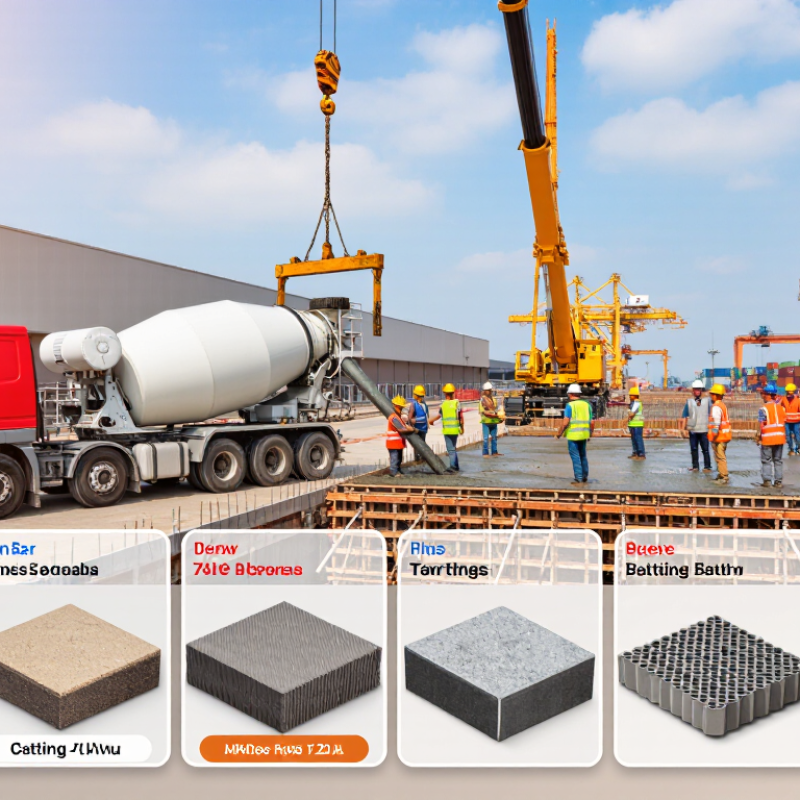
EN 206 strength classes give global buyers a shared starting point for ready-mix concrete selection.
In the range C8/10 to C100/115, the first number indicates characteristic cylinder strength, while the second indicates cube strength, measured in MPa at 28 days. C8/10 suits low-load work, blinding concrete, and some temporary applications. C25/30 often fits general slabs, beams, and foundations, subject to design calculations. Keep this distinction visible.
At the upper end, C50/60 and above support heavily loaded columns, bridges, and high-rise elements.
C100/115 demands tighter control of aggregates, water content, admixtures, curing, and testing. A higher class is not automatically a better purchase. It may increase cost, placing difficulty, and thermal-cracking risk. Exposure conditions also matter. Chlorides, freeze-thaw cycles, sulfates, and carbonation can change the required specification.
Reliable sourcing requires more than a strength number.
Buyers should request the full mix designation, exposure class, maximum water-cement ratio, cement type, slump, aggregate size, delivery temperature, and conformity evidence. Check whether strength results come from cylinders or cubes; confusing them can distort comparisons between countries. Trial batches and independent laboratory tests reduce uncertainty, though they cannot replace structural engineering.
One practical weakness remains: site handling is often underestimated. Delayed discharge, added water, poor vibration, or weak curing can lower real performance, even with a compliant mix.

Normal-strength concrete, typically specified at 20–50 MPa after 28 days, suits housing, pavements, foundations, slabs, and many general commercial structures. The range is broad, not interchangeable. A 20 MPa mix may fit lightly loaded work, while 40–50 MPa can support heavier columns or demanding floor systems. EN 206 separates cylinder and cube strength classes, so global buyers should state the test specimen clearly. Otherwise, an apparently cheaper quotation may compare different values.
The Global Cement and Concrete Association reports that roughly 14 billion cubic metres of concrete are produced worldwide each year. This scale supports broad supply availability, but consistency still depends on materials, batching, transport, and curing. ACI 318-19 emphasizes specified compressive strength and quality control, yet strength alone does not guarantee durable concrete. Field experience repeatedly shows that delayed placement, excess site water, or poor curing can reduce real performance. That detail is easy to underestimate.
High-performance ready mix concrete is changing how global buyers evaluate structural materials. Mixes above 60 MPa can reduce column sizes, increase usable floor space, and support heavily loaded industrial structures. Their water–cement ratios usually remain below 0.40, limiting capillary pores after curing.
Low water content creates a demanding production environment. Accurate moisture checks for sand and stone are essential. High-range water reducers improve flow without adding water. Supplementary cementitious materials may improve durability, but they can also slow early strength. Site temperature, transport time, and placement method must be reviewed together. A strong laboratory result can still disappoint on site.
Tips: Request trial batches using local aggregates. Check slump retention after transport. Verify compressive strength with tested cubes or cylinders. Require curing records and clear acceptance criteria. Do not judge performance from the water–cement ratio alone.
In practical projects, pumping high-performance concrete requires stable workability and careful vibration. Self-compacting concrete can fill dense reinforcement, while fiber-reinforced mixes may control cracking in selected applications. These options are not interchangeable. The best type depends on exposure, loading, reinforcement congestion, and construction equipment. Engineers should compare 7-day and 28-day results, because early strength may hide later performance. Some specifications remain too optimistic. That deserves a second review.
Self-Consolidating Concrete: 550–850 mm Slump Flow per EFNARC
Self-consolidating concrete, or SCC, flows around reinforcement without mechanical vibration. EFNARC’s 2005 European Guidelines classify SCC by slump flow. SF1 covers 550–650 mm, SF2 covers 660–750 mm, and SF3 covers 760–850 mm. These ranges help global buyers match concrete flow with structural geometry and placement distance.
The 550–650 mm range suits open sections and simple reinforcement. SF2 is commonly considered for walls, columns, and moderate congestion. SF3 offers greater filling ability for heavily reinforced or complex forms. However, higher flow does not automatically mean better performance. Mix design still depends on viscosity, aggregate grading, temperature, and delivery time. ACI 237R-07 identifies passing ability, filling ability, and resistance to segregation as essential SCC properties.
Small details matter. A 700 mm slump flow may change after transport. Site trials should check flow retention, visual stability, and formwork pressure. EFNARC recommends testing fresh properties under controlled procedures, not relying on appearance alone. This is where purchasing decisions can become imperfect. A supplier may meet the target flow but miss the required viscosity or strength development. Buyers should request test results, trial-batch records, and conformity documentation before large-volume ordering. Less vibration can reduce site noise and labor demand, but poor control creates blocked reinforcement, surface defects, and costly repairs.
Lightweight and fiber-reinforced concrete can reduce structural dead load without sacrificing practical performance. EN 206 classifies lightweight concrete by oven-dry density, from 800 to 2,000 kg/m³. In procurement, buyers must distinguish dry density from fresh density. The difference can affect pumping, volume calculations, and delivered cost. ACI 213R-14 reports that structural lightweight concrete commonly uses equilibrium densities around 1,440–1,840 kg/m³. These mixtures suit elevated slabs, precast panels, bridge decks, and buildings where weight matters.
Fiber reinforcement adds another layer. Steel, synthetic, and mineral fibers can help control plastic shrinkage, impact damage, and crack width. However, fibers do not automatically replace structural reinforcement. Their results depend on dosage, fiber geometry, mixing energy, and aggregate absorption. ASTM C1116 provides guidance for fiber-reinforced concrete, while ASTM C567 supports density testing for lightweight concrete. A trial batch remains essential. Laboratory results may not match a long-distance delivery.
Tips: Ask for oven-dry and fresh-density values separately. Request compressive strength, water absorption, slump retention, and fiber dosage data. Check pump pressure with the actual mix. One overlooked detail can change placement performance. I would also review local aggregates, curing conditions, and batch-to-batch variation before approving a global supply specification. A lower density sounds efficient, but it may increase moisture sensitivity and finishing difficulty. Test the mixture in realistic conditions, not only on paper.