Choosing the right Composite Wall Panels can influence a building’s safety, comfort, appearance, and long-term operating cost. Global buyers face different climates, codes, shipping routes, and installation skills. A panel that performs well in a dry warehouse may fail in a humid coastal city. Details matter.
Joseph Lstiburek, a respected building-science expert, puts it plainly: “A wall is a water management system.” His observation is highly relevant to panel selection. Buyers should examine thermal resistance, fire performance, moisture control, acoustic value, surface durability, and joint design. They should also verify test reports, certifications, warranty terms, and supplier experience. Marketing claims are not enough. Look for measurable data.
This guide reviews seven leading Composite Wall Panels for international purchasing decisions. The comparison considers insulated metal panels, aluminum composite panels, fiber cement systems, and other widely used solutions. Each option has strengths. Each also has weaknesses. None is perfect. A lightweight panel may reduce freight costs but require more careful handling. A premium finish may look impressive but increase replacement expenses. Installation speed can save labor, yet poor detailing can create leaks around windows and corners. Those practical trade-offs are easy to overlook.
The best choice depends on the project, not the brochure. Climate, building use, local labor, maintenance access, and regulatory approval should shape the final decision. Careful buyers ask difficult questions early. That habit often prevents expensive surprises later.
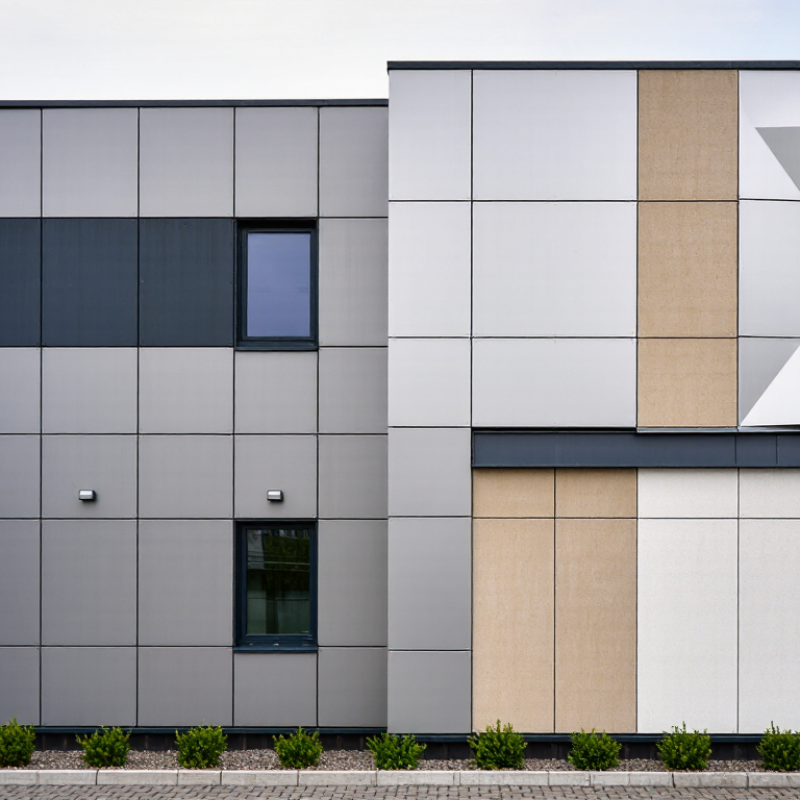
7 Best Composite Wall Panels for Global Buyers?
What Are Composite Wall Panels and Why Do Global Buyers Choose Them?
Composite wall panels combine two or more materials into one engineered building surface. Common options include aluminum composite, insulated metal, mineral wool sandwich, phenolic foam, FRP, wood-plastic, and honeycomb panels. Each option balances weight, insulation, fire performance, moisture resistance, and appearance differently. In practice, the “best” panel depends on climate, building codes, installation skills, and maintenance access.
Global buyers often choose these systems because they reduce on-site labor and create more predictable wall performance. The UNEP 2024 Global Status Report for Buildings and Construction reports that buildings and construction consume about 32% of global energy and produce approximately 34% of global CO2 emissions. Better-insulated panels can support lower heating and cooling demand, especially in warehouses, cold rooms, and modular buildings. They also arrive in repeatable sizes, with clean factory edges and fewer wet trades.
The details matter. A coastal project may need corrosion-resistant skins, while a high-humidity facility needs sealed joints and low water absorption. Fire classification must be checked locally, not assumed from a product name. Independent testing, declared thermal values, and installation records strengthen buyer confidence. Still, panels are not maintenance-free. Poor detailing can cause condensation, damaged fasteners, or hidden leaks. That uncomfortable point is often missed. Buyers should compare the full life cycle, not just the lowest purchase price.
7 Best Composite Wall Panels for Global Buyers?
Key Criteria for Evaluating Composite Wall Panels
The “best” panel depends on climate, building use, and local compliance. Seven common options deserve comparison: aluminum composite, mineral-core, honeycomb, fiber-cement, wood-plastic, phenolic, and insulated sandwich panels. On projects I have reviewed, panel weight affects handling, framing, and shipping costs more than brochures suggest. A lighter panel is not automatically better.
Fire performance must come before appearance. Request full classification reports, not isolated test claims. Check the core, joints, sealants, and fixing system together. Thermal resistance matters in cold regions, while moisture absorption and drainage matter in humid climates. For coastal sites, examine corrosion resistance and fastener compatibility. Impact testing is important for schools, warehouses, and busy entrances. Small dents become expensive disagreements.
Verify dimensions, flatness, coating durability, color variation, and replacement availability. Ask whether the supplier provides traceable batch records and clear installation instructions. Independent laboratory results are more dependable than translated marketing sheets. Confirm the testing standard and its version. Compare embodied carbon, recycled content, maintenance intervals, and end-of-life options. I would not trust a low price without a landed-cost calculation. Yet this method has limits; labor, customs delays, and imperfect installation can change the result. A practical mock-up often reveals problems that spreadsheets miss.
Key criteria include fire performance, weather resistance, thermal insulation, moisture resistance, weight efficiency, and installation practicality.
The scores are indicative 0–100 benchmarks based on typical characteristics of each panel category. Actual performance depends on core composition, thickness, coating, tested fire rating, climate, and installation method. Buyers should verify product certificates and project-specific specifications before selection.
Global buyers need more than attractive surfaces. The panel must suit climate, structure, fire requirements, and installation skills.
Aluminum composite panels offer clean façades and light handling. Insulated metal panels provide strong thermal performance for warehouses and cold rooms. Fiber cement composite panels resist impact and create a solid, mineral appearance. FRP panels work well in hygienic interiors, especially where frequent washing is expected. Wood-plastic composite panels add warmth to balconies and ventilated façades, but expansion needs careful allowance. Phenolic resin panels deliver useful insulation with a slim profile. Honeycomb panels reduce weight while maintaining stiffness, making them suitable for transport-sensitive projects.
No panel wins every project. A coastal building may need better corrosion protection, while a cold-region facility needs reliable joints and continuous insulation. Buyers should request tested fire ratings, thermal data, water-resistance evidence, and installation details. Local building codes still matter. Product certificates alone cannot replace competent design review.
Tips: Check the complete wall system, not only the panel core. Inspect sample edges, fasteners, sealants, and color consistency. Ask how the panels perform after years of sunlight and cleaning. Delivery damage is also easy to underestimate. A cheaper panel may become expensive after delays, replacement work, or unsuitable accessories. Some recommendations remain uncertain without project drawings and climate data.
Global buyers can compare seven practical panel families: aluminum composite, FRP, GFRP, wood-plastic, mineral-filled, honeycomb, and insulated sandwich panels. Each offers different performance, cost, and sustainability results. Aluminum composite panels provide smooth finishes and low maintenance. FRP panels resist moisture and chemicals in demanding interiors. GFRP adds strength where impact resistance matters. Wood-plastic panels create a warmer appearance, but may expand with temperature changes. Mineral-filled panels improve fire performance, while honeycomb panels reduce weight. Insulated sandwich panels combine cladding and thermal control in one system. No option wins every test.
Purchase cost can hide installation, transport, cutting, and replacement expenses. Lightweight panels may reduce labor and shipping costs. However, fragile edges can increase site waste. Insulated panels may lower energy demand, depending on climate and building design. Recycled content is useful, but it does not guarantee easy recycling after installation. Adhesives, coatings, and mixed materials can complicate recovery. A reliable comparison should review verified test reports, service conditions, warranty limits, and regional building requirements. Cost estimates often fail when these details are missing.
Tips: Request samples and inspect the core, edges, surface, and fixing points. Compare installed cost, not panel price alone. Ask for fire, moisture, impact, thermal, and emissions data. Check whether local contractors can repair the chosen system. Also question optimistic sustainability claims; durability may matter more than recycled content.
For global buyers, the “best” composite wall panel depends on the market, not a universal ranking. Seven practical options include aluminum-faced, insulated metal, mineral-core, fiber-cement, honeycomb, wood-polymer, and stone-textured panels. Each suits different demands. Coastal projects need corrosion resistance and sealed joints. Cold regions require tested thermal performance. Hot climates need UV-stable finishes and controlled expansion.
Check local rules before comparing prices. Ask for fire classification, water absorption, wind-load data, thermal values, and test dates. Confirm whether reports cover the complete wall system, including rails, fasteners, and insulation. A panel may perform well in a laboratory but fail after poor cutting or storage. That detail is often underestimated. Also examine container dimensions, minimum order quantities, replacement lead times, and local installer skills. A sophisticated panel can become a costly mistake where trained installers are unavailable.
Tips: Order samples and place them outdoors for several weeks. Inspect color, flatness, edge quality, and joint movement. Compare lifecycle cost, not only factory price. Request references from similar climates. I would also test one small wall section before full production. It may reveal a weak adhesive, awkward fixing method, or confusing installation guide. Perfect specifications do not guarantee a perfect project.
| Panel Type | Typical Structure | Common Thickness | Approx. Weight | Thermal Performance | Moisture & Corrosion Resistance | Typical Applications | Best-Fit Markets | Key Selection Checks |
|---|---|---|---|---|---|---|---|---|
| Aluminum Composite Panel | Two aluminum sheets bonded to a polymer or mineral-filled core | 3–6 mm | Approximately 5–8 kg/m² at 4 mm | Low to moderate; mainly a rainscreen or decorative cladding layer | Very good when edges, joints, and coatings are properly detailed | Commercial façades, canopies, signage, column covers, interior feature walls | Urban commercial construction and retrofit projects requiring low weight and clean finishes | Core fire classification, coating durability, panel flatness, wind-load design, joint detailing |
| Mineral-Filled Fire-Resistant Composite Panel | Aluminum skins with a non-combustible or fire-retardant mineral-filled core | 4–6 mm | Approximately 7–12 kg/m², depending on core formulation | Low to moderate; separate insulation is normally required | Very good; aluminum surfaces resist rain and ultraviolet exposure when correctly coated | High-rise façades, transport facilities, institutional buildings, public-use projects | Markets with strict reaction-to-fire requirements and demanding façade regulations | Obtain tested fire classification for the complete wall build-up, not only the panel; check smoke and façade-system requirements |
| Insulated Metal Sandwich Panel with PIR Core | Pre-finished steel or aluminum faces bonded to a rigid polyisocyanurate insulation core | 40–200 mm | Approximately 10–18 kg/m², depending on thickness and facings | High; typical thermal conductivity of PIR core is about 0.022–0.028 W/m·K | Good to very good; performance depends on metal coating, joint seals, and condensation control | Cold rooms, warehouses, factories, logistics buildings, agricultural structures | Industrial and commercial markets prioritizing fast installation and energy efficiency | Required U-value, fire classification, joint air-tightness, corrosion category, temperature range, and panel span |
| Insulated Metal Sandwich Panel with Mineral Wool Core | Steel or aluminum faces bonded to high-density mineral wool insulation | 50–250 mm | Approximately 15–35 kg/m², depending on thickness and density | Moderate to high; typical thermal conductivity is about 0.035–0.045 W/m·K | Good when the outer coating and panel joints are correctly specified | Fire-rated industrial walls, factories, power facilities, public buildings, acoustic enclosures | Markets where fire resistance, acoustic control, and robust construction are priorities | Fire-resistance period, core density, acoustic rating, water absorption, joint design, handling equipment, and structural span |
| Fiber-Cement Composite Panel | Cementitious matrix reinforced with cellulose or synthetic fibers and mineral fillers | 6–18 mm | Approximately 10–20 kg/m², depending on thickness and density | Low; usually installed over a drained and ventilated cavity with insulation behind | Good resistance to humidity, rot, insects, and ultraviolet exposure; edges need protection | Rainscreen façades, residential buildings, schools, soffits, ventilated cladding systems | Residential and institutional markets seeking mineral-based appearance and long service life | Water absorption, freeze-thaw performance, panel movement, fixing method, cutting dust, and local fire requirements |
| Compact HPL Exterior Panel | Multiple resin-impregnated kraft-paper layers compressed with decorative surface layers | 6–13 mm | Approximately 8–15 kg/m², depending on thickness | Low; it is primarily a durable exterior skin rather than insulation | Very good resistance to impact, staining, humidity, and ultraviolet exposure when exterior grade is specified | Ventilated façades, balconies, residential exteriors, educational and hospitality buildings | Design-led markets requiring textured finishes, color stability, and impact resistance | Exterior-grade certification, color stability, concealed or visible fixing, panel expansion, ventilation cavity, and impact rating |
| Wood-Plastic Composite Wall Panel | Wood fibers or flour combined with thermoplastic resin, pigments, and stabilizing additives | 10–25 mm | Approximately 8–18 kg/m², depending on profile and density | Low to moderate; hollow profiles can improve weight efficiency but are not full insulation systems | Good resistance to rot and insects; thermal expansion and prolonged moisture exposure must be managed | Decorative façades, terraces, balconies, garden structures, hospitality and residential interiors | Warm or humid markets favoring wood appearance, low maintenance, and easy machining | Wood-plastic ratio, fire behavior, slip or surface performance, color fading, thermal movement, drainage, and recycled-content claims |