| 1. Order Planning |
Several hours to several days before delivery |
The customer specifies the concrete quantity, strength class, intended use, delivery address, access requirements, and preferred delivery time. |
Confirm the required volume, mix specification, site access, discharge location, and whether pumping equipment is needed. |
A delivery plan that matches the construction schedule and site conditions. |
| 2. Mix Production |
Usually completed shortly before dispatch |
Cement, aggregates, water, and any specified admixtures are proportioned and mixed to produce fresh ready-mix concrete. |
Batch quantities, moisture levels in aggregates, water content, and the specified mix design are checked. |
A uniform batch with the requested workability and performance characteristics. |
| 3. Truck Loading |
Typically a few minutes |
Fresh concrete is loaded into a rotating drum truck, which continuously agitates the mixture during transport. |
The truck receives the correct batch, the drum is clean, and the load documentation is accurate. |
Concrete is ready for transport while maintaining a consistent mixture. |
| 4. Transport to Site |
Commonly 15–60 minutes, depending on distance and traffic |
The truck travels to the construction site while the drum rotates to help prevent segregation and premature stiffening. |
Travel time, traffic, weather, site readiness, and the concrete's workable time are monitored. |
The load arrives as workable concrete suitable for placement. |
| 5. Site Arrival and Positioning |
Usually 5–15 minutes |
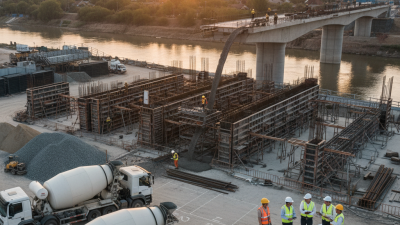
The truck enters the site, follows the agreed access route, and positions itself near the formwork or concrete pump. |
Ground stability, overhead clearance, reversing space, pedestrian safety, and discharge access are checked. |
The truck is safely positioned for controlled discharge. |
| 6. Load Verification |
A few minutes before discharge |
The delivery ticket is reviewed and the concrete may be visually inspected or tested for properties such as slump, temperature, and air content. |
Check batch details, production time, mix designation, quantity, and any project-specific testing requirements. |
The delivered concrete is confirmed against the order and project requirements. |
| 7. Concrete Discharge |
Often 20–60 minutes per truck, depending on site conditions |
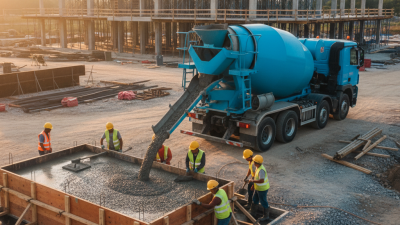
Concrete is discharged directly from the truck chute or transferred through a pump, conveyor, bucket, or other approved method. |
Maintain a steady placement rate and avoid unnecessary delays, excessive free fall, or unauthorized water addition. |
Fresh concrete is placed in the required area with minimal segregation. |
| 8. Placement and Consolidation |
Immediately after discharge |
Workers spread the concrete, place it around reinforcement and embedded items, and consolidate it using suitable methods such as internal vibration. |
Verify that forms remain stable, reinforcement stays in position, and voids or trapped air are minimized. |
A dense, properly positioned concrete section with the intended shape and coverage. |
| 9. Finishing |
After initial placement and before final setting |
The surface is struck off, leveled, and finished according to the project requirements, such as a smooth, broomed, or textured surface. |
Finishing should be performed at the appropriate stage and should not add water to the surface. |
A level surface with the specified appearance and profile. |
| 10. Curing and Clean-Up |
Begins immediately after finishing |
The concrete is protected from rapid moisture loss, extreme temperatures, and premature loading. Remaining material and equipment are cleaned safely. |
Use an appropriate curing method and prevent wash water or leftover concrete from entering drains or waterways. |
The concrete gains strength under controlled conditions and the site is left safe and orderly. |