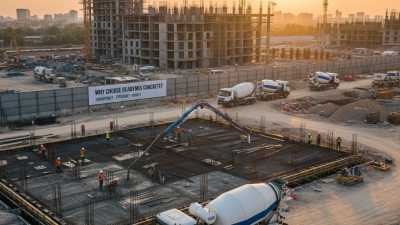
Buying a concrete truck for international delivery is not simply a matter of comparing prices. Global buyers must evaluate drum capacity, discharge speed, chassis strength, maintenance access, and local operating conditions. A truck that performs well in Dubai may struggle on steep roads, narrow construction sites, or colder northern routes. That difference matters.
Concrete logistics specialist Chris Tull offers a practical reminder: “The success of a placement is determined before the concrete arrives.” His point reflects field experience. Every concrete truck delivery depends on accurate scheduling, reliable communication, and realistic travel times. Buyers should examine loading limits, mixing performance, spare-parts availability, and after-sales support before signing a purchase agreement.
This 2026 guide compares leading delivery options for contractors, distributors, and infrastructure companies serving multiple markets. It considers transit distance, drum volume, fuel efficiency, driver visibility, safety equipment, and telematics. It also examines whether suppliers provide technical training and clear warranty terms. Those details can protect a project from costly delays.
No ranking is perfect. Local roads change. Regulations differ. Fleet operators may value durability more than advanced electronics. A smaller truck may be better for urban projects, even when a larger drum appears more economical. Buyers should question every specification and request verified performance data. The strongest choice is not always the newest model. It is the concrete truck delivery solution that matches the material, route, climate, workforce, and service network. That requires careful review, not marketing language.
Concrete truck delivery means transporting freshly mixed concrete from a batching plant to a construction site in a rotating drum. The drum keeps cement, aggregate, water, and admixtures moving during transit. This reduces segregation and protects workability before placement. The purpose is practical: deliver a consistent mix at the right temperature, slump, and volume. A site crew checks the delivery ticket, arrival time, batch details, and test samples.
The global scope is substantial. The Global Cement and Concrete Association reports that roughly 14 billion cubic metres of concrete are produced annually. The International Energy Agency estimates cement production causes about 7% of global carbon dioxide emissions. These figures explain why delivery efficiency matters. Yet concrete itself is rarely shipped across oceans. Fresh concrete has a limited working window, so local plants, suitable road access, and reliable dispatch systems usually determine the best option. Standard drum mixers suit routine building work. Agitating trucks support longer routes, while volumetric mixers can produce concrete near remote or variable-demand sites.
Real projects are less predictable than brochures suggest. Traffic, heat, steep access roads, and pump delays can change performance quickly. A truck that looks suitable on paper may struggle at a crowded urban site. Buyers should compare drum capacity, discharge speed, axle limits, washout arrangements, temperature control, and service support. ISO-based quality procedures and documented calibration improve confidence, but they do not replace experienced site coordination.
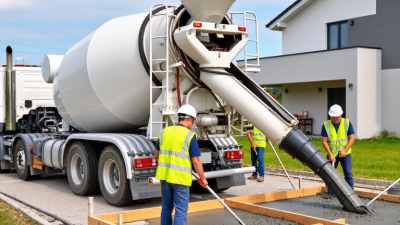
2026 Top Concrete Truck Delivery Options for Global Buyers
Key Concrete Truck Types and Delivery System Differences
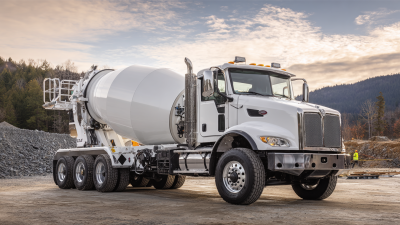
Transit mixer trucks remain the standard choice for ready-mix concrete delivery. They carry batched concrete from a central plant to the jobsite. The rotating drum limits segregation during transport. However, long routes can reduce workability, especially in hot climates. Buyers should check drum capacity, discharge speed, insulation, and local axle limits before ordering.
Volumetric mixer trucks batch materials on site. Separate compartments hold cement, aggregates, water, and admixtures. This system supports precise production for changing quantities and remote projects. It can reduce material waste, but operators need accurate calibration and reliable moisture measurements. Small mistakes matter. A damp aggregate pile may alter the final mix.
Pump trucks use a boom or line system to place concrete across walls, slabs, and tall structures. They are delivery systems, not always mixing systems. A transit mixer may supply the pump, creating a two-stage operation. This improves reach but increases coordination, cleaning, and site-space requirements. Trailer-mounted line pumps suit narrow access roads, while boom pumps need stable ground and overhead clearance.
Global buyers should compare the full delivery process, not only engine power or drum volume. Review spare-part access, operator training, road conditions, climate exposure, and service documentation. Specifications can look impressive on paper. Field performance may differ. A practical site trial often reveals problems that a brochure will not.
| Concrete Truck Type | Typical Rated Capacity | Main Delivery System | Typical Discharge Method | Recommended Delivery Distance | Best-Fit Applications | Key Advantages | Main Limitations | Important Buying Checks |
|---|---|---|---|---|---|---|---|---|
| Standard Transit Mixer | 6–12 m³ per load | Central-batch plant mixing with continuous drum agitation during transport | Rear drum discharge through a chuted outlet; delivery height is commonly adjustable with chute sections | Usually suitable for scheduled urban and regional deliveries; actual distance depends on traffic, temperature, mix design, and local setting-time requirements | General foundations, slabs, columns, roads, bridges, and commercial construction | Widely available, consistent batching, high daily productivity, and simple site operation | Requires a separate batch plant; delivery is sensitive to traffic delays and placement access | Drum volume, legal gross vehicle weight, axle load limits, chute reach, water tank arrangement, drum speed control, and local road regulations |
| Front-Discharge Mixer | 6–12 m³ per load | Central-batch plant mixing with an articulated front discharge arrangement | Forward-mounted chute, often with hydraulic positioning for improved placement visibility | Suitable for normal ready-mix routes where the truck can approach the placement area directly | Tight residential sites, curbside placement, paving, and projects requiring precise truck positioning | Improved operator visibility, reduced repositioning, and better access in constrained sites | Generally more complex and may have higher purchase, maintenance, and operator-training requirements | Front chute reach, steering clearance, hydraulic system capacity, cab visibility, turning radius, and service support |
| Volumetric or Mobile-Batch Mixer | Commonly 4–10 m³ of produced concrete per load, depending on material compartments and chassis payload | Separate storage of cement, aggregates, water, and admixtures with metered mixing at the jobsite | Integrated discharge conveyor, chute, or auger arrangement; configuration varies by vehicle | Useful for variable-distance routes because fresh concrete can be produced at the placement location | Remote work, repair projects, small pours, intermittent demand, and jobs requiring multiple mix designs | Reduces dependence on a nearby batch plant, limits leftover concrete, and allows on-demand production | Requires accurate calibration, material handling, operator skill, and reliable supply of separate raw materials | Aggregate bin volume, cement storage, water metering accuracy, calibration procedure, admixture dosing, output rate, and cleaning system |
| Mini or Compact Mixer Truck | 1.5–5 m³ per load | Central-batch mixing or compact mobile-batch configuration, depending on the vehicle | Short rear chute, side discharge, or compact front discharge system | Well suited to short and medium routes in dense urban areas or locations with access restrictions | Residential driveways, narrow streets, landscaping, utility work, and small repair pours | Small turning radius, lower site impact, easier access, and reduced risk of over-delivery on small jobs | Lower output per trip and potentially higher cost per cubic metre for large-volume projects | Overall width and height, turning radius, payload compliance, chute reach, road access, and minimum order requirements |
| Trailer-Mounted Concrete Pump Truck | Concrete throughput commonly about 10–80 m³/h, depending on pump class, mix, and site conditions | Concrete is supplied by mixer trucks and transferred through a separate stationary pump and delivery pipeline | High-pressure pumping through rigid pipes and flexible hoses | Suitable for long horizontal runs or significant vertical placement distances when correctly configured | Foundations, basements, high-rise work, restricted-access sites, and large slab placements | Reaches areas inaccessible to a mixer discharge chute and supports controlled, continuous placement | Needs a separate mixer supply, trained operators, pipeline setup, priming, and thorough post-pour cleaning | Maximum pressure, theoretical output, aggregate size compatibility, pipe diameter, hose length, engine power, and cleaning equipment |
| Truck-Mounted Boom Pump | Concrete throughput commonly about 60–180 m³/h, subject to pump size, mix, and placement conditions | Mixer trucks feed a truck-mounted pump equipped with a hydraulically controlled placing boom | Boom-mounted pipeline and flexible end hose; no direct chute positioning is required at the pour point | Designed for substantial horizontal and vertical reach within the boom's operating envelope | High-rise structures, large foundations, bridges, industrial floors, and high-volume pours | Fast setup, wide placement coverage, reduced manual hose handling, and high productivity | Higher acquisition and transport cost, large outrigger footprint, and strict requirements for overhead and ground clearance | Vertical and horizontal reach, boom folding configuration, outrigger spread, pump output, transport dimensions, and site exclusion zones |
| Self-Loading Mixer | Commonly 1.5–6 m³ per batch, depending on drum size and payload rating | Integrated front loader collects aggregates and feeds an onboard weighing and mixing system | Tilting drum and hydraulic chute, with discharge direction controlled from the vehicle | Suitable for remote or changing work locations where a fixed batching facility is unavailable | Rural construction, agricultural projects, road maintenance, small infrastructure, and remote sites | Combines loading, batching, mixing, and delivery in one machine; supports small-batch flexibility | Lower output than large transit mixers and greater dependence on operator technique and material stockpiling | Loader reach, weighing accuracy, drum capacity, four-wheel drive performance, ground clearance, water metering, and spare-parts availability |
| Agitator Truck for Central-Mixed Concrete | 6–12 m³ per load | Concrete is fully mixed at the central plant; the truck primarily maintains uniformity during transit | Standard rear chute or pump transfer at the construction site | Appropriate for planned routes with controlled travel and discharge times | High-volume ready-mix supply, highway projects, commercial structures, and coordinated pours | Consistent plant-controlled production and efficient fleet scheduling | Less flexibility if traffic or site delays threaten the specified placing window | Agitation speed, drum cleanliness, dispatch tracking, maximum allowable delivery time, slump retention, and washout management |
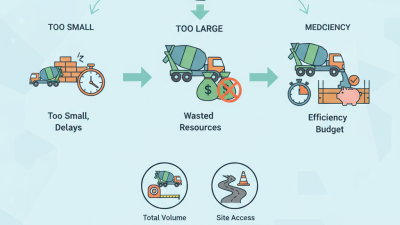
Capacity must match the pour, not the brochure. For most urban placements, a 6–10 m³ mixer offers a practical balance between payload and maneuverability. Yet axle limits, bridge rules, and narrow gates can reduce usable volume. Nominal capacity is not working capacity. Check the planned batch size, road restrictions, and return distance before comparing delivery options.
ASTM C94/C94M uses a 90-minute discharge benchmark, unless different limits and performance controls are approved. That window can shrink in 35°C heat, heavy traffic, or long pumping lines. Request slump retention data, drum speed, discharge rate, and washout arrangements. ACI 304R stresses coordinated transport, placement, and testing; delivery timing alone cannot protect concrete quality. Small details matter.
Operating conditions deserve equal weight. Check grade, turning radius, soil bearing, weather, and water access before selecting a truck. The GlobalABC and UNEP 2024 buildings report attributes 32% of global energy use and 34% of global CO2 emissions to buildings and construction in 2023. Route efficiency therefore matters, although the report covers the wider sector, not mixer fleets alone. The IEA’s Cement 2024 analysis places cement-related emissions near 7% of global CO2 emissions. Boundaries vary. A delivery plan can look efficient on paper and still fail at the gate.
Typical capacity and delivery performance by operating condition
Standard 6×4 and heavy-duty 8×4 configurations generally provide the highest concrete volume and discharge productivity on paved or mixed-road projects. Compact 4×2 trucks are better suited to urban access restrictions, while 6×6 configurations offer improved traction for rough or low-quality construction roads. Actual performance depends on drum design, traffic conditions, material consistency, route length, and local payload regulations.
International buyers should match the truck to site conditions, not only engine size. Transit mixers suit ready-mix deliveries within controlled travel times. Volumetric mixers can batch concrete on site when distances, weather, or pour schedules remain uncertain. Pump trucks improve placement on tall or congested projects. The Global Cement and Concrete Association reports that nearly 14 billion cubic metres of concrete are produced annually worldwide, so quality control cannot rely on supplier claims alone.
Request compliance with recognized standards, such as ASTM C94/C94M or EN 206, according to the destination market. Confirm cement type, water-cement ratio, slump range, aggregate grading, and required strength. Ask for recent laboratory results and batch tickets. A calibrated mixer matters. An unverified scale can quietly distort every load. The IEA estimates cement production creates about 7% of global energy-related and process CO2 emissions, making low-carbon mix documentation increasingly relevant to procurement reviews.
Pricing extends beyond the quoted truck rate. Compare concrete volume, fuel surcharges, export handling, inland transport, taxes, insurance, currency exposure, and waiting-time fees. Request a delivered-price breakdown. Inspect service records, calibration certificates, spare-parts access, operator training, and warranty terms. Check whether the supplier can provide replacement parts locally. That detail is often overlooked. Site trials remain valuable, because published specifications may not predict performance on a hot, dusty, or remote project.
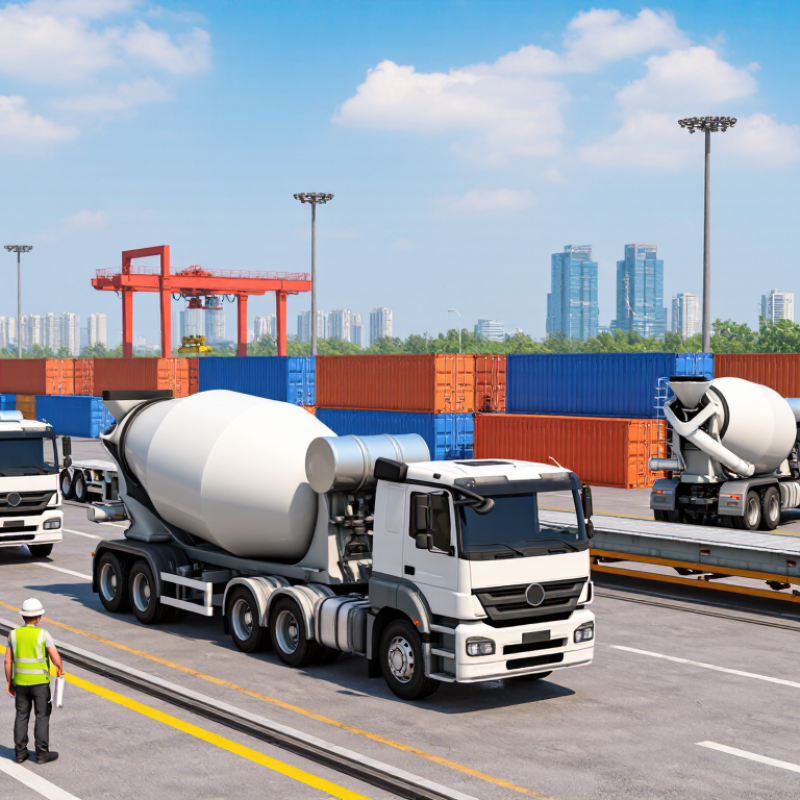
Shipping a concrete truck requires more than choosing the lowest freight quote. Roll-on/roll-off shipping suits driveable units, while flat-rack loading may fit oversized equipment. Confirm vehicle height, width, gross weight, axle spacing, and fuel status before booking. UNCTAD’s Review of Maritime Transport reports that ships carry over 80% of global trade by volume. Port congestion can still delay project schedules. Small errors compound.
Import compliance should begin before production. Buyers should verify the correct customs classification, commercial invoice, packing list, certificate of origin, and bill of lading. Local rules may also require emissions certification, road approval, lighting compliance, and safety inspections. The World Bank’s 2023 Logistics Performance Index evaluates 139 economies and highlights customs efficiency, infrastructure, and delivery reliability. These factors directly affect clearance time and inland transport planning. A perfect landed-cost model is rarely perfect. Exchange rates, demurrage, and inspection fees can change quickly.
After-sales support needs measurable commitments. Require a parts list, service manuals, remote troubleshooting access, and response times for urgent failures. Keep common items available near the operating region, including hydraulic seals, mixer components, sensors, and filters. Warranty terms should define labor coverage, travel expenses, evidence requirements, and exclusions. The International Trade Centre’s trade data resources can help buyers compare import conditions and product requirements across markets. Local technicians are valuable, but their training should be documented. Otherwise, support quality depends too heavily on personal experience.