Choosing among the best RMC plant manufacturers in China requires more than comparing prices or advertised output. A ready-mix concrete plant must match local demand, aggregate sizes, mix designs, site conditions, and delivery schedules. The Global Cement and Concrete Association estimates that around 14 billion cubic metres of concrete are produced worldwide each year, making reliable batching a practical concern for buyers. That scale matters. Even small weighing or moisture-control errors can affect consistency across repeated loads.
Efficiency deserves attention, too. The International Energy Agency’s 2023 cement-sector analysis identifies cement production as responsible for about 7% of global CO₂ emissions. An RMC plant does not make cement, but its batching accuracy, energy use, and material-handling design can influence project waste and operating costs. Buyers should compare verified production capacity with actual operating references, then check calibration procedures, control-system support, spare-parts availability, and commissioning services. Ask for details. A polished brochure is not proof of dependable performance.
This guide examines manufacturers through practical criteria rather than sales claims alone. It considers plant configuration, automation, maintenance access, and after-sales support, while noting that the right choice depends on the buyer’s project and location. No shortlist can replace factory checks or customer references. That limitation is worth remembering. A lower quotation may look attractive, yet unclear component specifications or service terms can create problems later.
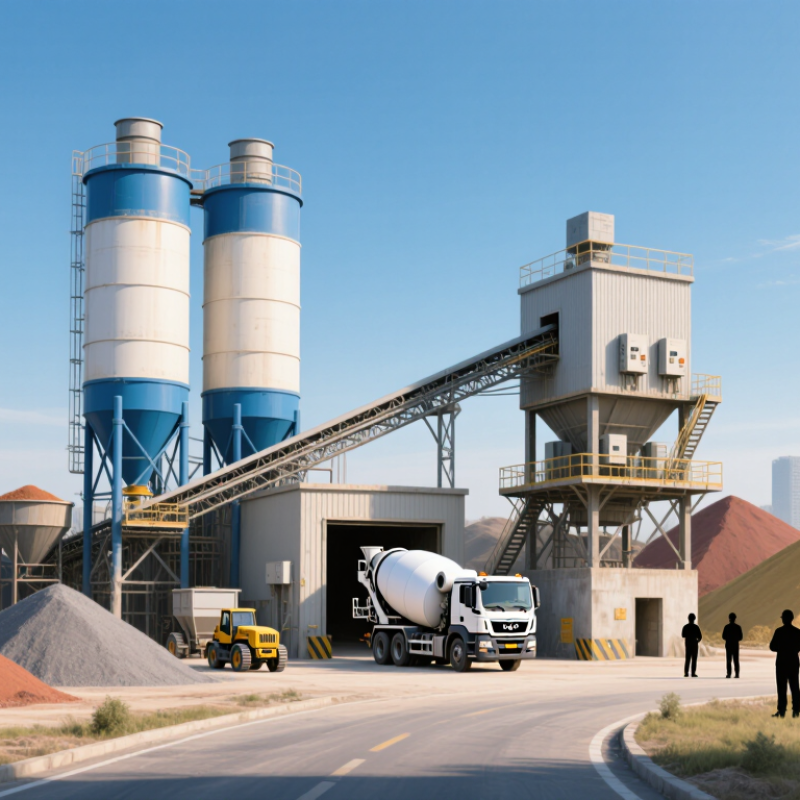
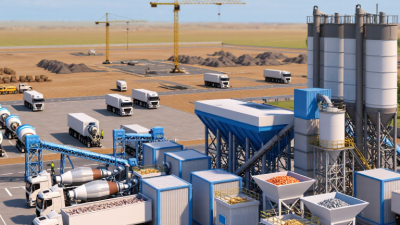
A ready-mix concrete plant measures and combines cement, aggregates, water, and admixtures in controlled proportions. Its job is not simply to produce concrete quickly. Consistent moisture readings, calibrated scales, and clean storage bins all affect the mix delivered to a site. Buyers should consider expected output, local material supply, and delivery distance before comparing equipment.
Plant types are often described by mobility. Stationary plants suit long-term, high-volume production near busy construction areas. Mobile plants can be relocated, which helps projects in changing or remote locations. Compact plants use less space, though their production capacity may not meet every project’s peak demand. There is a trade-off.
Plants also differ in how they mix each batch. In a wet-batch system, ingredients are mixed at the plant before concrete travels in a mixer truck. A dry-batch system weighs ingredients at the plant, then mixes them during transit. This distinction matters: delivery time, traffic, and mix requirements can affect which setup works best. Specifications deserve careful review. A mobile plant may seem ideal on paper, but setup time, water access, and maintenance support can complicate the choice. The right type depends on actual site conditions, not just a quoted output figure.
Plant types are classified by different factors: stationary, mobile, and compact describe layout or mobility, while wet-batch and dry-batch describe where concrete is mixed. These categories can overlap. Capacity figures below are indicative; actual output depends on the plant configuration, mix design, material supply, and operating conditions.
| Plant type or configuration | Mixing method | Indicative rated output | Typical layout and mobility | Main advantages | Buyer considerations |
|---|---|---|---|---|---|
| Stationary wet-batch plant | Aggregates, cement, water, and admixtures are mixed at the plant, typically in a central mixer. | Commonly offered in configurations of roughly 25–240 m³/h. | Fixed installation with dedicated storage, batching, mixing, and loading areas. | Consistent mixing and centralized quality control; well suited to regular, high-volume supply. | Check land and foundation requirements, mixer size, aggregate storage, maintenance access, and truck loading capacity. |
| Mobile wet-batch plant | Concrete is mixed on site before discharge into delivery vehicles or other specified equipment. | Often configured at approximately 25–120 m³/h; actual output varies by model and setup. | Transportable modules or trailer-mounted sections; setup and relocation still require site preparation. | Can serve temporary projects or changing work locations while retaining plant-side mixing. | Confirm transport dimensions, local road limits, installation time, utility needs, and whether relocation equipment is included. |
| Compact or modular plant | May use wet-batch mixing; the process depends on the selected equipment package. | Frequently available in small-to-medium configurations, for example around 25–120 m³/h. | Equipment is arranged in compact or prefabricated modules to reduce site footprint and simplify assembly. | Can suit constrained sites and projects that need a quicker installation than a fully custom layout. | Compare actual footprint, silo and aggregate-bin capacity, access for servicing, and expansion options. |
| Stationary dry-batch plant | Materials are weighed and loaded into a truck mixer, where mixing is completed during transport or at the destination as specified. | Capacity is specified by the batching and loading system; it is not directly equivalent to a central wet-mixer rating. | Usually a fixed batching and truck-loading installation without a central concrete mixer. | Fewer central mixing components; truck mixers perform the mixing function. | Verify truck-mixer availability, loading-cycle times, transport distance, and the applicable concrete quality requirements. |
| Mobile dry-batch plant | Dry materials are batched at the plant and mixed in the truck mixer according to the project’s operating procedure. | Depends on batching-cycle time, number of loading points, and the available truck fleet. | Transportable batching modules; truck mixers remain essential to the delivery and mixing process. | Can combine a relocatable batching setup with truck-based mixing for suitable projects. | Assess site access, truck scheduling, material moisture control, and the time required to relocate and recommission the plant. |
Selection note: Compare plants using the same basis for rated output, such as mixer cycle time and batch size for wet-batch systems, or loading-cycle and truck-fleet assumptions for dry-batch systems. Confirm local electrical, environmental, safety, and concrete-quality requirements before purchase.