China Top Garden Shed Manufacturers for Global Buyers

Choosing a Garden Shed manufacturer in China can offer global buyers a wide range of sizes, materials, and customization options. The challenge is finding a supplier whose product quality, communication, and delivery arrangements fit the project. A polished catalog is only a starting point. Details matter.

This overview introduces manufacturers and practical points buyers can check before requesting a quote. It considers construction materials, roof and wall options, available dimensions, finish quality, packaging, and customization. Buyers should also ask for clear product specifications, current factory or product evidence, sample policies, and written details about lead times and shipping terms. Verify each claim directly. A low price may look attractive, but it can leave important costs unclear if packaging, accessories, or delivery are excluded.

No supplier is ideal for every order. A small garden may call for a compact resin shed, while a commercial project may need stronger panels and tailored dimensions. These are different needs. Comparing them fairly takes care. This guide focuses on useful questions rather than unsupported rankings, so readers can assess suppliers against their own requirements. Some information may change, and a product photo cannot confirm every detail. Treat it as a prompt to ask better questions, not as proof.
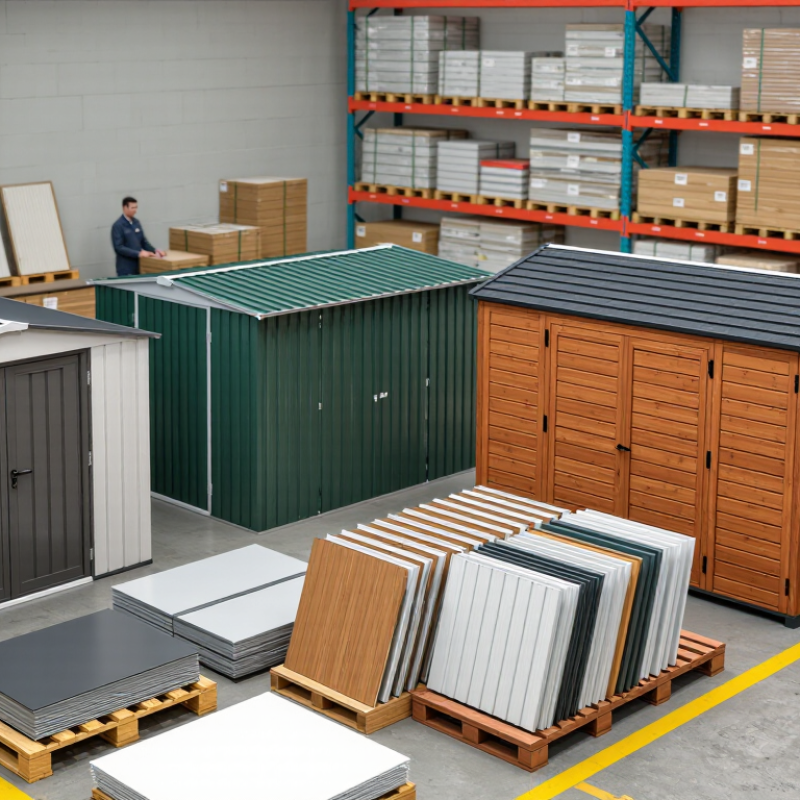
China Top Garden Shed Manufacturers for Global Buyers

Overview of China’s Garden Shed Manufacturing Industry

China’s garden shed industry draws on a broad metalworking and building-products base. China’s National Bureau of Statistics reported that manufacturing value added grew 5.0% in 2023. This is useful context, not a shed-specific growth figure. The official data does not isolate garden sheds. That distinction matters. Manufacturers commonly work with galvanized steel, aluminum, resin panels, or timber, then cut, form, coat, and pack components for export.

Buyers can assess real production capability by checking panel thickness, coating specifications, joint design, and whether assembly instructions match the shipped parts.

Trade figures also need careful reading. UN Comtrade’s HS 9406 category covers prefabricated buildings, not garden sheds alone, so its export totals cannot be treated as shed-market sales. A factory visit or a detailed production audit can reveal more: look for consistent hole alignment, sealed roof seams, and clear carton labels.

Ask how the supplier tests water entry and wind resistance; a neat sample is not proof of repeatable quality. Container loading plans matter, too, because bulky panels can make freight costs decisive.

Some suppliers may offer broad customization, but tooling changes can add time and cost. That part is easy to underestimate.

Common Garden Shed Types, Materials, and Uses

Garden sheds vary by roof shape, size, and daily purpose. A lean-to shed fits neatly beside a wall and suits narrow yards. Gable-roof models offer more headroom for bicycles, lawn tools, or stacked planters. Larger workshop sheds can include shelves and a bench, but need clear access and a level base. Small units matter, too. They keep hand tools dry without taking over a garden. Before choosing a type, measure the equipment you actually own; shed dimensions on paper can feel surprisingly tight once a mower is inside.

Common materials include wood, resin, and metal, each with practical trade-offs. Wood can be painted, repaired, and fitted with shelves, though it needs periodic protection from moisture. Resin is light and easy to wash, but heavy items may require added interior support. Metal panels are sturdy for tool storage, yet condensation can affect stored items if airflow is poor. No material is perfect. Check roof drainage, door width, ventilation, and the surface beneath the shed. A potting shed benefits from daylight and a work surface; a mower shed needs a wide entrance and a dry floor. Sometimes the best choice is less attractive than expected, but easier to maintain.

Leading Chinese Garden Shed Manufacturers for Global Buyers

Leading Chinese garden shed manufacturers serve buyers seeking practical storage, flexible sizing, and export-ready production. China’s manufacturing base offers options in galvanized steel, resin, and treated wood, but material choice should match local weather and installation conditions.

Grand View Research estimated the global outdoor furniture market at about US$50.8 billion in 2023, with projected growth through 2030. This is not a shed-only figure, but it signals continued investment in outdoor living. Details matter.

For global buyers, compare manufacturers by more than quoted price. Request material specifications, panel thickness, coating details, roof-load guidance, and assembly instructions. Ask for clear photographs of production checks and packed cartons. A sample order can reveal sharp edges, missing fasteners, or confusing instructions before a larger shipment. Those small failures cost time.

Experienced suppliers should explain how they control moisture, corrosion, and packaging damage. For coastal delivery, ask how metal parts are protected against salt exposure. For wooden sheds, confirm the stated moisture range and treatment process. One weakness in many sourcing plans is assuming that a catalogue model fits every climate. It may not. Compare lead times, replacement-part support, and inspection records, then confirm specifications in writing before production. Industry growth creates opportunity, but reliable sourcing still depends on verifiable details.

How to Evaluate Garden Shed Manufacturers and Suppliers

When evaluating garden shed manufacturers, look beyond catalogue photos. Request drawings that specify panel thickness, frame spacing, roof load, drainage, and anchoring points. Ask how steel is coated and how coating thickness is measured; “rust-resistant” alone tells you little. For timber or resin models, check UV-weathering evidence and material specifications. A factory sample can reveal sharp edges, loose fittings, or confusing assembly steps. It is not a full production run, though, so verify that approved specifications match batch inspections.

Traceability matters. World Steel Association’s World Steel in Figures 2024 reports 1.892 billion tonnes of crude steel production in 2023, but volume does not prove consistent quality. Ask suppliers for material certificates, inspection records, and clear defect-handling terms. Packaging and logistics deserve equal scrutiny: UNCTAD’s Review of Maritime Transport 2024 says shipping carries over 80% of world merchandise trade by volume. Request carton dimensions, loading photos, and a packing list, then check whether replacement panels can be identified by part number. Test communication with a specific question. Slow replies are a signal, not a verdict. A factory visit helps, but it cannot replace written tolerances and documented checks.

Sourcing, Customization, and Export Considerations for Buyers

For global buyers, choosing a garden shed manufacturer means checking more than price and catalog photos. Request drawings with wall thickness, frame dimensions, roof load assumptions, and packed-carton measurements. Ask how material substitutions are approved and whether pre-shipment inspections can include door alignment, fasteners, and water-shedding details. Small details matter. A sample assembled on a level showroom floor may not reveal problems caused by uneven ground or repeated wet seasons.

Customization works best when specifications are measurable. Share the target climate, preferred finish, ventilation needs, and available installation space. Confirm color references, hardware, labels, manuals, and packaging before production; late changes can affect cost and lead time. The WTO’s April 2024 report recorded a 1.2% fall in world merchandise trade volume during 2023. It then forecast 2.6% growth for 2024, a forecast rather than a current result. In uncertain trade conditions, buyers should compare total landed cost, not factory price alone. Check freight terms, carton protection, shipment milestones, and responsibility for export documents with the supplier and freight forwarder. Requirements vary by destination, so verify applicable product, labeling, and import rules with local authorities. A checklist helps, but it is not foolproof; confirm critical details in writing before production starts.

China Garden Shed Exports: Typical Container Capacity

Approximate internal volume of common shipping containers used to transport garden sheds and other bulky goods.

A larger container can provide more loading volume, but the number of sheds shipped depends on packaging dimensions, loading method, and weight limits. Actual container specifications vary by equipment and carrier; confirm dimensions and payload with your freight forwarder.

Article Source: