Why Choose Ready Mix Cement for Your Construction Needs?
When it comes to construction, choosing the right materials is crucial. One popular choice is ready mix cement. This product offers several benefits for both residential and commercial projects.
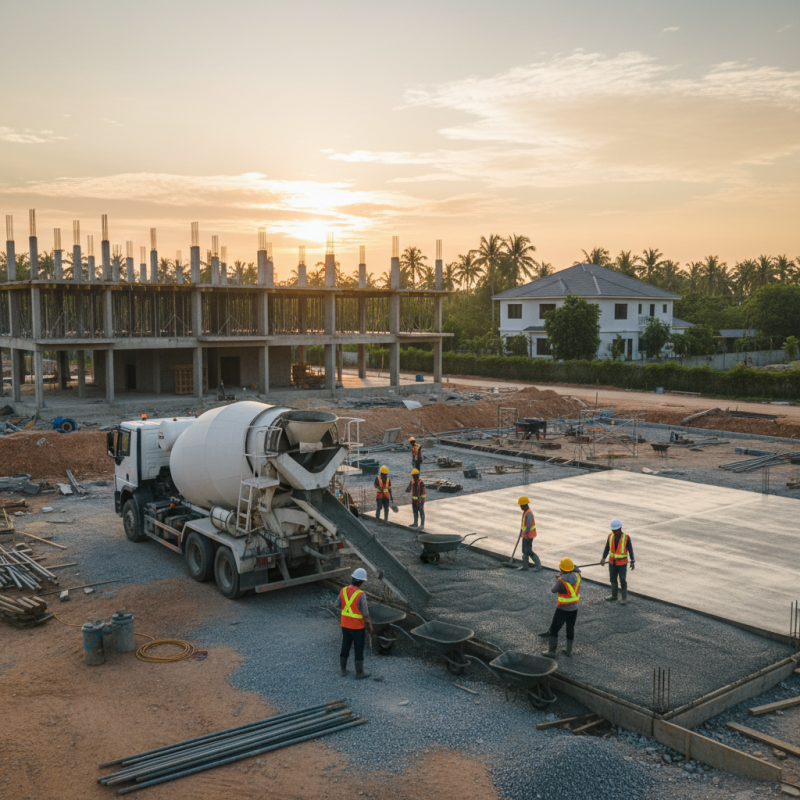
Ready mix cement is pre-mixed at a plant. This means you receive a consistent mixture every time. You can save time and reduce labor costs by using this product. It arrives at your site ready to pour. You don’t need to worry about measuring ingredients on-site. This convenience can speed up your project significantly.
However, not all projects may benefit equally from ready mix cement. Certain environmental factors, such as temperature or humidity, can affect its performance. On-site mixing may still be necessary in some unique cases. Reflecting on these aspects can help you make a more informed decision. Always consider your specific project requirements when choosing ready mix cement.
Benefits of Using Ready Mix Cement for Construction Projects
Ready mix cement has gained popularity in the construction industry. One significant advantage is its consistent quality. According to the National Ready Mixed Concrete Association, ready mix cement is produced under strict quality control measures. This leads to higher durability and better performance in various construction projects.
Another benefit is time efficiency. Using ready mix cement reduces on-site labor and mixing time. Projects can move forward faster, saving both time and money. Studies show that ready mix can speed up construction timelines by up to 30%. This efficiency allows contractors to focus on other critical aspects of the project.
Tips for using ready mix cement:
- Always order slightly more than needed. This prevents delays caused by shortages.
- Ensure proper transportation time. Fresh concrete must be used within a specific timeframe to maintain its integrity.
- Consider environmental factors. Temperature and humidity can affect the setting time. Adjust your planning accordingly to avoid issues.
Ready mix cement helps streamline processes. However, incorrect usage can lead to cracking or weak structures. It’s essential to calculate needs accurately and pay attention to environmental conditions.
Why Choose Ready Mix Cement for Your Construction Needs?
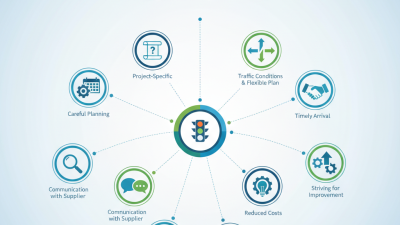
The chart above illustrates the key benefits of using ready mix cement in construction projects, highlighting aspects such as quality control, time efficiency, cost effectiveness, labor savings, and environmental considerations.
Comparison of Ready Mix Cement and Traditional Cement Solutions
When comparing ready mix cement and traditional cement, several factors stand out.
Ready mix cement is produced in controlled environments. This ensures consistent quality and reduces variability.
In contrast, traditional cement often relies on individual mixes at job sites. This can lead to inconsistencies due to fluctuating materials or mix ratios.
One advantage of ready mix cement is its convenience. It arrives on-site, ready to use, saving labor and time.
Traditional methods require ingredients to be delivered and mixed, which can delay projects. However, there are times when traditional cement might be preferable for
small, bespoke projects or unique local requirements. You might miss out on tailored solutions with ready mix.
Tip: Always check local regulations before selecting your cement type. This avoids compliance issues later on.
Another consideration is the environmental impact.
Ready mix operations may produce less waste since they utilize precise measurements.
Yet, the transportation of ready mix can increase a project's carbon footprint. Conversely, traditional methods may allow for better resource utilization.
Assessing your project's specific needs is crucial.
Tip: Consider conducting a lifecycle analysis to compare environmental impacts.
It's essential to weigh these factors carefully. The choice between ready mix and traditional cement can significantly affect project outcomes.
Be open to adjusting based on project requirements and site conditions.
Factors Influencing the Choice of Ready Mix Cement
When considering ready mix cement for construction, several factors come into play. The quality and consistency of the mix are paramount. Studies show that using ready mix cement can improve strength and durability by as much as 15% compared to traditional methods. This data underscores the importance of precision in construction materials.
Another critical factor is the convenience and efficiency ready mix offers. Construction sites can often be chaotic. Having premixed cement allows for quicker job completion, reducing labor costs by approximately 20%. Time saved on delivery and setup can lead to completing projects ahead of schedule. However, some builders still hesitate, worried about the added cost. This reflects a common misconception about the value of ready mix cement.
Transport logistics also influence the decision. The distance from the plant to the site affects freshness and workability. If the transport time exceeds 90 minutes, the cement's performance may decline. Construction managers must weigh this against the benefits. It’s a balancing act between cost and quality. Finding local suppliers might mitigate this issue, yet it requires diligent research.
Environmental Considerations in Using Ready Mix Cement
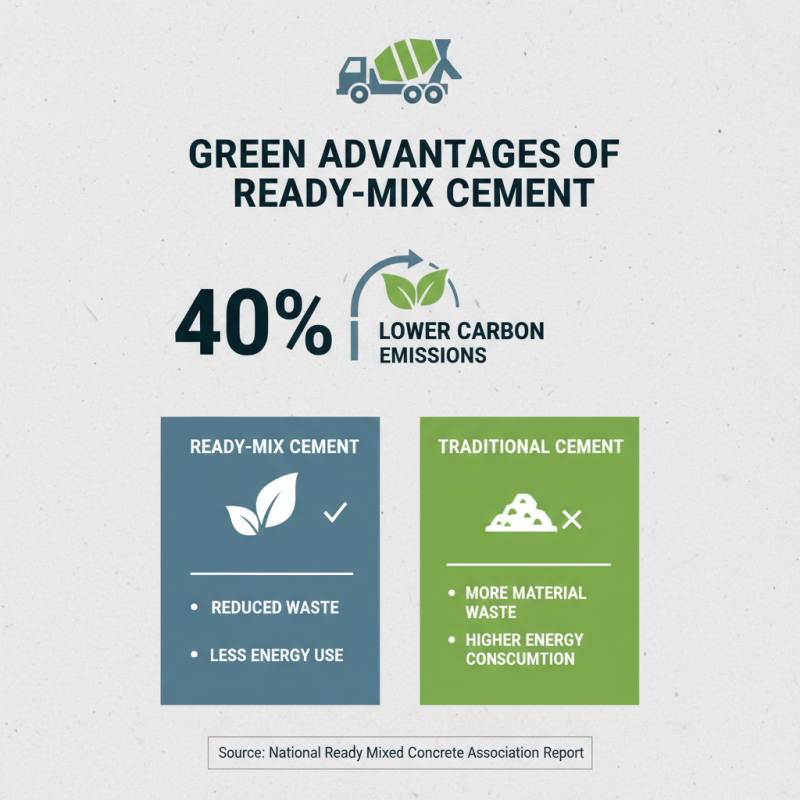
Using ready-mix cement offers significant environmental benefits. Unlike traditional cement mixing, ready-mix reduces waste and energy consumption. According to a report by the National Ready Mixed Concrete Association, using ready-mix can lower carbon emissions by up to 40%. This is crucial in a world grappling with climate change.
The production of ready-mix cement incorporates advanced technology. This process optimizes blending, ensuring uniform quality and minimizing material waste. Furthermore, many plants use recycled materials, which lessens raw material extraction. However, the reliance on natural resources remains a concern. Awareness of sourcing can help mitigate this issue.
**Tip:** When selecting ready-mix cement, inquire about the plant's sustainability practices. Supporting those that prioritize eco-friendly measures can make a difference.
Interestingly, the transportation aspect of ready-mix can also be environmentally friendly. Proper route planning reduces fuel consumption and lowers greenhouse gas emissions. Still, it’s essential to consider the carbon footprint of delivery distances. Efforts should be made to source suppliers close to project sites.
**Tip:** Always calculate the distance from your supplier to minimize transportation impacts. This small step can contribute to greener construction practices.
Cost Analysis of Ready Mix Cement for Construction Needs
Choosing ready mix cement can significantly impact your construction project's overall cost. Ready mix cement is manufactured in controlled conditions, allowing for consistency and quality. This consistency results in fewer wasteful mistakes and less rework, which can save money in the long run.
However, it is essential to analyze the initial costs versus potential savings. The price of ready mix cement is often higher per cubic meter compared to traditional mixing on-site. Yet, when accounting for labor, equipment rental, and time, the benefits may outweigh the initial investment. A construction project running behind schedule can incur additional costs. Overall, weighing these factors thoughtfully is crucial.
Moreover, consider the specific requirements of your project. Each construction site presents unique challenges. If the site has limited space, ready mix cement may be more practical. Conversely, if your budget is tight and time allows for manual mixing, you might find savings there. Ultimately, it’s a balancing act between immediate cost and long-term efficiency.
Why Choose Ready Mix Cement for Your Construction Needs? - Cost Analysis of Ready Mix Cement for Construction Needs
| Parameter |
Ready Mix Cement Cost (per cubic meter) |
Traditional Cement Cost (per cubic meter) |
Labor Cost Savings (%) |
Overall Project Time Savings (%) |
| Residential Buildings |
$150 |
$120 |
20% |
15% |
| Commercial Buildings |
$180 |
$160 |
25% |
20% |
| Infrastructure Projects |
$200 |
$170 |
30% |
25% |
| Industrial Projects |
$220 |
$190 |
35% |
30% |