How to Choose the Right Pre Mix Concrete for Your Project?
Choosing the right pre mix concrete is critical for any construction project. According to the Global Concrete Market Report, the demand for pre mix concrete is projected to grow by 5% annually. This increase highlights the importance of selecting the appropriate type for your needs. Pre mix concrete can vary significantly in composition and strength, impacting the durability of the final structure.
Different projects may require specific grades and formulations of pre mix concrete. For example, residential builds may focus on cost-efficiency. In contrast, infrastructure projects often demand higher strength mixes. Misjudging the type of pre mix concrete can lead to costly mistakes. These mistakes can result in structural failures or delays in project timelines, which are unacceptable in today’s competitive market.
When selecting pre mix concrete, consider the environmental conditions and load-bearing needs. Improperly matched mixtures can lead to cracking or deterioration. It’s vital to reflect on your project's requirements and consult with professionals. Selecting the right pre mix concrete isn't just about cost; it's about long-term performance and safety.
Understanding the Basics of Pre Mix Concrete Types
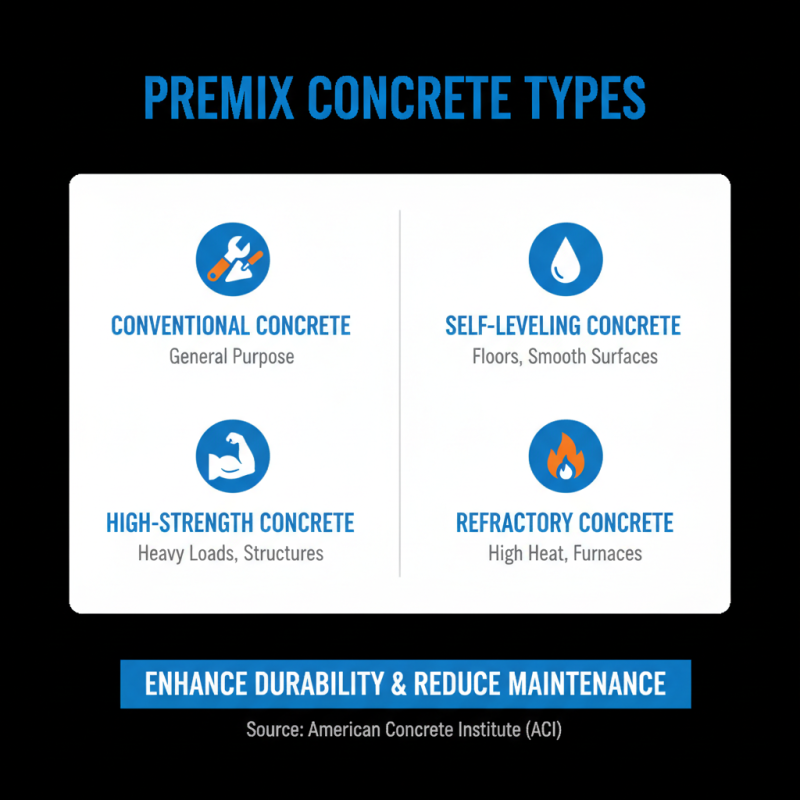
When it comes to pre mix concrete, understanding its different types is crucial. There are several varieties available, each designed for specific applications. For example, conventional concrete is often used for general purposes. However, high-strength concrete is essential for structures that bear heavy loads. The American Concrete Institute reports that using the right type can enhance durability and reduce maintenance costs significantly.
Another option is self-leveling concrete, which provides a smooth finish for flooring projects. It's easy to apply and cures quickly, making it ideal for time-sensitive jobs. Additionally, light-weight concrete can be advantageous for projects that require less structural weight. Industry studies suggest that using light-weight concrete can reduce costs by up to 20% without compromising strength.
Choosing the right type can be overwhelming. Many factors influence the decision, such as climate, project size, and mix proportions. It’s crucial to consider these elements to achieve desired outcomes. Misjudging the concrete type may lead to delays or increased costs later on. Always reference industry standards and consult with professionals when necessary.
Assessing Project Requirements for Concrete Selection
When assessing project requirements for concrete selection, it is crucial to understand the specific needs of the project. The type of structure, for example, will heavily influence the type of concrete chosen. According to a report by the American Concrete Institute (ACI), structural concrete typically requires higher compressive strength, often ranging from 25 to 30 MPa. For residential projects, lower strength levels may be sufficient, promoting cost efficiency.
Environmental conditions also play a significant role. If the project site experiences extreme temperatures or moisture exposure, you may need special mixtures to enhance durability. Research indicates that nearly 25% of concrete failures result from inadequate adaptation to environmental factors. Projects in coastal areas, for instance, may need a mixture with increased resistance to chloride penetration.
It’s also important to consider the finishing requirements. Aesthetic preferences can dictate the use of decorative concrete. This adds another layer of complexity. The necessity for quick setting times may conflict with achieving desired finishes or textures. Balancing these factors is challenging but essential. Insight from industry analyses suggests that over 30% of project delays arise from improper concrete selection. Ignoring these details can lead to significant cost overruns and project setbacks.
Concrete Mix Types for Various Project Requirements
Comparing Durability, Workability, and Cost of Pre Mix Options
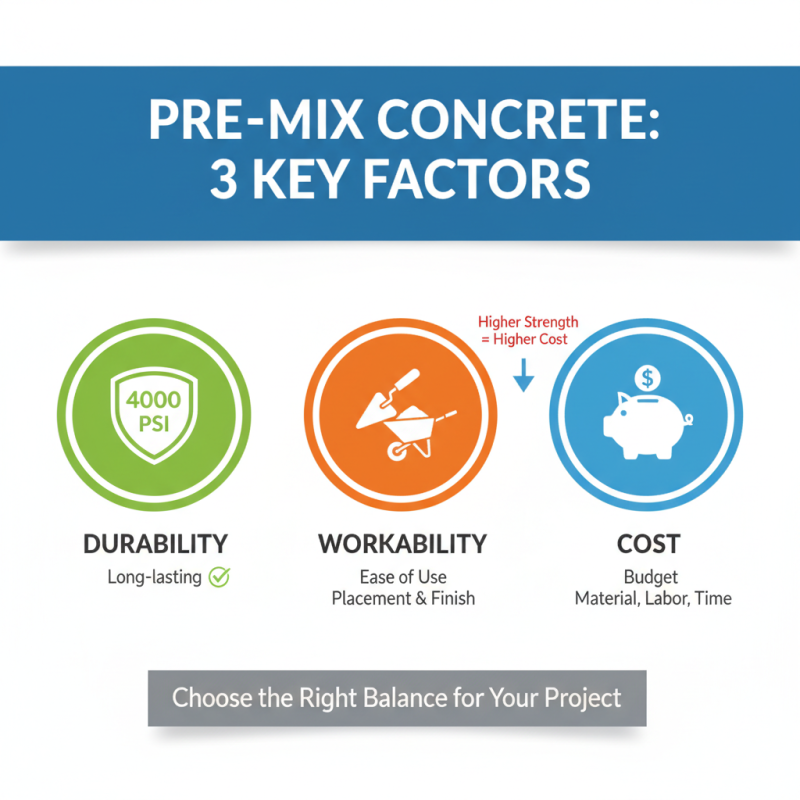
When choosing pre-mix concrete, consider three main factors: durability, workability, and cost. Durability is essential for long-lasting structures. According to industry reports, concrete with a compressive strength of 4,000 PSI typically withstands various environmental conditions better than lower-strength options. However, higher durability can come at a cost.
Workability is another critical element. Different mixes can suit various applications. A mix with a slump of 5-7 inches offers sufficient fluidity for easy placement. Yet, finding the right level can be tricky. Too much water can weaken the concrete, while too little can make it hard to work with.
Cost is always a concern. A standard pre-mix might range from $100 to $150 per cubic yard. However, specialty mixes can exceed $200. This price difference forces tough choices. Cheaper options may save money upfront but could lead to repairs later. Balancing these aspects is crucial for ensuring the project's success.
Evaluating Environmental Conditions for Concrete Use
When considering concrete for your project, evaluating environmental conditions is crucial. Temperature variations affect curing times. For example, concrete exposed to freezing temperatures can weaken. According to industry reports, concrete sets slower at lower temperatures, leading to potential structural issues.
Moisture levels also play a key role. High humidity can increase the risk of efflorescence. This white, powdery substance can ruin aesthetics and indicate underlying problems. Selecting a pre-mixed concrete that suits local weather conditions can mitigate these challenges.
Additionally, site exposure is another aspect to evaluate. If your project is near the coast, saltwater can corrode concrete over time. This can shorten the lifespan of your structure. Regularly checking environmental reports can provide valuable insights. Knowledge of local conditions is paramount to making informed choices. Concrete is a long-lasting investment, and understanding its interaction with the environment is essential.
Consulting with Professionals for Optimal Concrete Choice
Choosing the right pre-mixed concrete can be overwhelming. The variety available is vast. Each project has unique needs. Consulting professionals can help simplify this process significantly. They offer insight that goes beyond basic material choices.
According to the American Concrete Institute, nearly 70% of all construction projects benefit from professional consultations. Experts can evaluate soil conditions, project requirements, and climate factors. These considerations are crucial. For instance, using concrete with a high water-cement ratio may seem appealing. However, it can lead to weaker structures.
Professionals also emphasize the importance of durability and strength. A report by Concrete Network suggests that different mixes can provide varying levels of tensile strength. An ideal mix might not be readily available at a local supplier, which could mean you need specialized ordering. Poor choices here can result in costly repairs later. It's essential to reflect on these decisions closely. Consulting with experts can ultimately save time and resources.