2025 How to Use a Concrete Base Calculator for Accurate Project Measurements
In the construction and landscaping industry, precision is key to ensuring that projects are completed efficiently and to the highest standard. One essential tool that can aid in achieving accurate measurements is the concrete base calculator. This handy device simplifies the process of calculating the amount of concrete needed for various applications, from patios to foundations. With the right measurements in place, project managers and DIY enthusiasts alike can avoid costly errors and ensure that they have the correct materials on hand before starting their work.
Utilizing a concrete base calculator not only streamlines the planning process but also enhances overall project effectiveness. By understanding how to leverage this tool effectively, users can make informed decisions regarding material quantities, such as volume and weight, catering to their specific project needs. With the construction industry evolving and adopting more innovative technologies, mastering the use of a concrete base calculator is becoming increasingly important for achieving optimal results. In the following sections, we will delve into the steps involved in using this calculator effectively, making it an indispensable ally in your construction toolkit.

Understanding the Importance of Accurate Measurements in Concrete Projects
Accurate measurements are critical in concrete projects, as they directly impact the quality, durability, and overall success of the construction. A precise calculation allows builders to determine the right amount of concrete required, minimizing waste and preventing costly overruns. When measurements are flawed, it not only leads to excess materials but also risks structural integrity, potentially resulting in serious safety issues. Therefore, understanding how to achieve accurate measurements is vital for any concrete undertaking.
Furthermore, using tools like a concrete base calculator can simplify the process of measurement. These calculators help estimate the right dimensions needed for concrete slabs, footings, or walls based on specific project requirements. They also account for factors such as depth and thickness, ensuring that builders work with exact figures. Implementing these tools promotes efficiency and reliability, fostering a professional approach that can enhance project outcomes. In essence, the precision in measurement serves as the foundation for successful concrete projects, instilling confidence in both the contractor and the client.
Overview of Concrete Base Calculators and Their Functionality
Concrete base calculators are essential tools for anyone planning a construction project, as they help ensure accurate measurements for the concrete needed in various applications. These calculators take into account the dimensions of the area being filled, including length, width, and depth, to determine the volume of concrete required. By inputting those measurements, users can quickly obtain a figure that allows them to estimate the necessary material quantities, avoiding both shortages and excess that can lead to wasted resources and increased costs.
When utilizing a concrete base calculator, it's crucial to measure carefully and input the dimensions correctly. Even small errors in measurement can lead to significant discrepancies in the overall amount of concrete needed. For best results, always double-check your calculations and consider factors such as the type of concrete and any additional reinforcements that may affect volume.
Tips for using a concrete base calculator effectively include being aware of the conversion units—make sure the measurements are in the same units before inputting them, whether in feet, meters, or inches. Additionally, it may be helpful to gather information about the slab thickness and the area’s slope or grading, as these factors influence the total volume required. Finally, when planning for waste, aim to order a bit more than the calculated amount to account for spillage or miscalculations.
Step-by-Step Guide to Using a Concrete Base Calculator
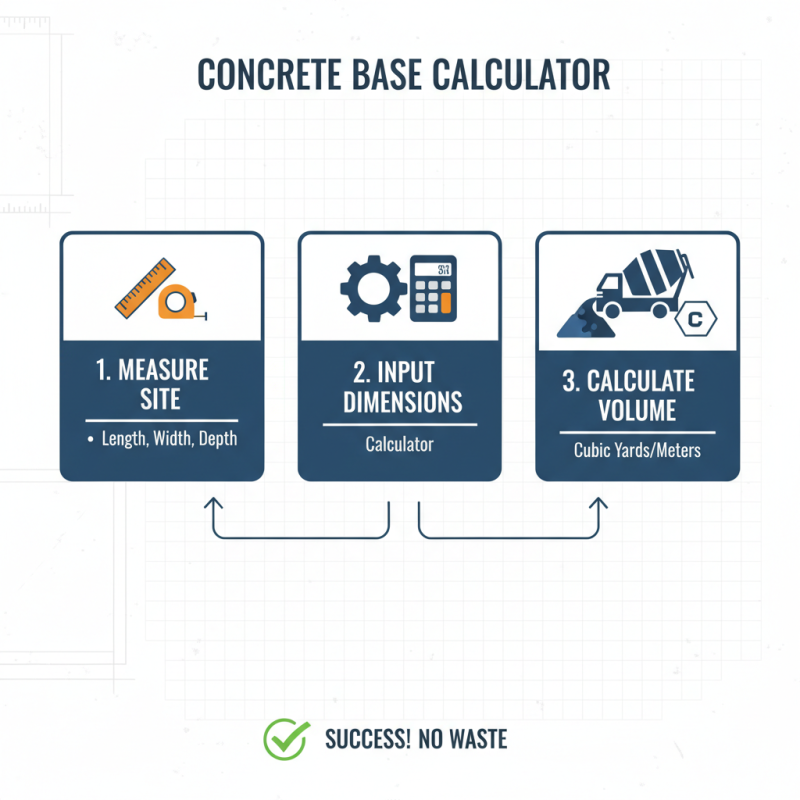
When embarking on a concrete project, accurately measuring the dimensions of your site is crucial for a successful outcome. A concrete base calculator can simplify this process significantly, ensuring you have the right amount of materials without any waste. To get started, gather your project’s dimensions: length, width, and depth. Then, input these values into the calculator, which will provide you with the volume of concrete needed in cubic yards or meters.
Tips: Before you begin, double-check your measurements. It’s easy to make small errors that can lead to significant discrepancies in the amount of concrete required. Additionally, consider rounding up slightly to account for any spillage or unforeseen adjustments during installation. This can save time and hassle later on.
Once you have the calculated volume, you can proceed to estimate costs and select your materials more efficiently. Remember to factor in extra space for any reinforcements, such as rebar or mesh, which may be necessary for larger projects. A well-prepared plan ensures that your project proceeds smoothly, allowing you to focus on the finishing touches rather than worrying about material shortages.
Common Mistakes to Avoid When Calculating Concrete Needs
When calculating concrete needs for your project, it's essential to be mindful of common mistakes that can lead to inaccurate measurements and unnecessary expenses. One frequent error is underestimating or overestimating the required amount of concrete. This often occurs when the dimensions of the area to be filled are not measured accurately, resulting in either a shortage or excess of concrete. Take the time to double-check your measurements before inputting them into a concrete base calculator.
Additionally, failing to account for variations in thickness is another common pitfall. Many DIYers assume a uniform thickness, while actual requirements may vary based on the specific application or location. This oversight can lead to insufficient material for certain areas and wastage in others. Always consider the intended use of the concrete and adjust the calculations accordingly to ensure a consistent thickness throughout.
**Tips:** Always measure twice to ensure accuracy. Consider drawing a diagram of your project area to visualize the dimensions. Utilize software or apps designed for concrete calculations that can help minimize errors. Lastly, consulting with a professional can provide insights that prevent costly mistakes in your concrete project.
Concrete Volume Calculation for Different Project Sizes
Tips for Ensuring Precision in Your Concrete Measurements
When it comes to ensuring precision in concrete measurements, it's essential to follow systematic approaches using a concrete base calculator. According to industry standards, slight discrepancies in measurements can lead to significant issues in structural integrity, costing builders approximately $3 billion annually in remedial work due to measurement errors. Therefore, utilizing a concrete base calculator can dramatically enhance the accuracy of your project, ensuring that materials are used efficiently and effectively.
To achieve precision, it's essential to consider several factors during the measurement process. The first step involves accurately assessing the dimensions of the area to be covered with concrete. It is recommended to measure length, width, and depth in consistent units, preferably in feet or meters, to avoid conversion errors. Additionally, recalibrating your measuring devices, such as tape measures or laser distance meters, before taking measurements can help in maintaining accuracy. Reports suggest that accurate calculation can lead to a 20% reduction in material waste, underscoring the importance of meticulous measurement techniques.
Furthermore, environmental conditions can affect concrete curing and setting times, and these factors should be integrated into your calculations. The American Concrete Institute advises that ambient temperature and humidity levels should be monitored, as they can alter the volume of concrete required. By implementing a concrete base calculator and taking these elements into account, builders can ensure not only precision but also enhance the longevity and performance of their concrete projects.