What is a Concrete Estimate Calculator and How to Use It?
In the construction industry, accurate cost estimation is essential. A concrete estimate calculator serves as a vital tool for contractors and project managers. According to a report by the National Ready Mixed Concrete Association, nearly 60% of project delays stem from budgeting inaccuracies. These delays can lead to significant financial losses.
Industry expert John Smith emphasizes, "Utilizing a concrete estimate calculator can dramatically improve budget accuracy." Such tools analyze variables like material costs, labor rates, and project size. They provide a quick and reliable way to derive estimates, reducing the chances of unforeseen expenses.
However, not all calculators are created equal. Some fail to account for regional cost variations or specific project needs. Users must assess the assumptions behind these calculators. Trusting a tool blindly can lead to pitfalls. Therefore, understanding the underlying data and customizing inputs is crucial for achieving reliable estimations in concrete projects.
What is a Concrete Estimate Calculator?
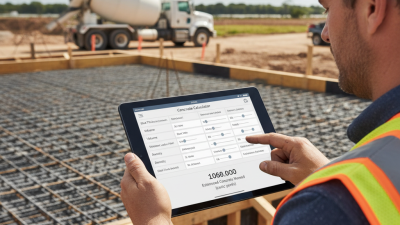
A concrete estimate calculator is a valuable tool for construction professionals and DIY enthusiasts alike. It allows users to quickly determine the amount of concrete needed for a project. This can include driveways, sidewalks, or foundations. Accurate estimates help prevent over-ordering or under-ordering concrete, which can lead to project delays and increased costs.
According to a report from the National Ready Mixed Concrete Association, improper estimating can cause materials waste of around 10% to 15%. The calculator requires input data, such as dimensions and the desired thickness of the concrete layer. Users must also consider factors like gravel base and soil type. By inputting specific measurements, the calculator generates a precise concrete volume needed, which is crucial for budgeting and resource management.
Many professionals still overlook these tools. They stick to traditional methods or rough calculations. This often leads to mistakes that could have been avoided. Moreover, estimating can be influenced by project conditions, such as weather or site constraints. A concrete estimate calculator not only streamlines the estimating process but also enhances accuracy in planning. Embracing technology can lead to more efficient project execution.
Concrete Cost Estimates in Different Regions
This bar chart represents the estimated cost of concrete per cubic yard in various regions. The data showcases how prices may vary depending on location and local market conditions.
Key Components of a Concrete Estimate Calculator
A concrete estimate calculator is an essential tool for any construction project. It provides a quick estimate of the materials and costs involved. Understanding its key components can lead to more accurate assessments.
One vital component is the volume calculation. This involves the area to be covered and the depth of the concrete. Accurate measurements are crucial. Mistakes can lead to excess costs or insufficient material. Always double-check your dimensions before proceeding.
Another important aspect is cost estimation. This includes not just material costs but also labor and additional fees. Knowing the local rates can give you a clearer picture. Tips for effective use: review current market prices and consider seasonal variations in costs. Take time to compare multiple estimates. This helps identify any discrepancies and avoid overspending.
Using a concrete estimate calculator can simplify budgeting. However, remember that it is not infallible. Always keep a margin for errors or unforeseen expenses in your planning. This way, you can stay prepared and manage your project more effectively.
Importance of Accurate Measurements in Concrete Estimates
Accurate measurements are crucial in concrete estimating. According to the American Concrete Institute, up to 25% of construction costs can be attributed to inaccurate estimates. This highlights why precise calculations matter. A minor miscalculation can lead to excess material costs or project delays, ultimately affecting budgets and timelines.
Concrete projects often overrun due to poor estimates. The National Association of Home Builders reports that inaccurate estimates can increase a project’s cost by 10-20%. These unexpected expenses might arise from both overordering and underordering materials. For instance, if too little concrete is ordered, the project halts while more is procured, causing delays and additional labor costs. Conversely, overestimating can lead to wasted resources, increasing the environmental footprint of a project.
Using a concrete estimate calculator can mitigate these risks. However, it is essential to input accurate dimensions. Even small errors can compound significantly. Precision in measurements directly influences the quality of the final work, as improper calculations might lead to weak foundations. Each project deserves careful planning, as the impacts of inaccuracies can ripple throughout the construction process.
Concrete Estimate Data Table
| Project Name |
Area (sq ft) |
Volume (cu yd) |
Estimated Cost ($) |
Completion Date |
| Residential Driveway |
500 |
5.5 |
$1,200 |
2023-12-01 |
| Commercial Parking Lot |
2,000 |
22.2 |
$4,800 |
2024-01-15 |
| Foundation for New Home |
1,500 |
16.6 |
$3,500 |
2024-02-20 |
| Patio Installation |
300 |
3.3 |
$700 |
2023-11-10 |
| Sidewalk Repair |
200 |
2.2 |
$500 |
2023-10-30 |
Step-by-Step Guide to Using a Concrete Estimate Calculator
Using a concrete estimate calculator can streamline your construction projects. It simplifies complex calculations by allowing users to input dimensions and desired thickness. According to a report from the National Ready Mixed Concrete Association (NRMCA), accurate estimates can save contractors between 5% to 15% on material costs.
To use a concrete estimate calculator effectively, start by measuring the area to be covered. Input these dimensions, including length, width, and depth. Most calculators also allow you to include the type of concrete. Remember, different mixtures can affect costs significantly. Industry data reveals that the average price of concrete in the U.S. ranges from $100 to $150 per cubic yard, depending on the type and quality.
After entering your details, review the output carefully. Mistakes in dimensions or calculations can lead to costly overages. A 2022 survey showed that 30% of construction projects exceed their budgets due to inaccurate estimates. This highlights the importance of double-checking your input before finalizing your order. By following these steps, you ensure an accurate estimate that can keep your project on track.
Common Mistakes to Avoid When Estimating Concrete Requirements
Estimating concrete requirements accurately is crucial for any construction project. Many professionals mistakenly underestimate or overestimate the amount of concrete needed, leading to costly errors. According to industry data, poor estimation can inflate project costs by up to 15%. This highlights the importance of using reliable tools like a concrete estimate calculator while being mindful of common pitfalls.
One major mistake is failing to account for factors like waste and spillage. The American Concrete Institute notes that waste can range from 5% to 10% of the total mix. Always factor in this percentage when calculating your needs. Another frequent error is not considering the thickness of the concrete required for the intended use. For instance, a residential driveway generally needs a thickness of 4 to 6 inches, while a loading dock might require 8 inches or more.
Tips: Always verify your calculations through multiple methods. Use both metric and imperial units to avoid conversion errors. Double-check local building codes for specific requirements. Keep in mind that poor site preparation can also affect how much concrete you’ll actually need, leading to additional adjustments.