Why You Need a Concrete Pour Calculator for Your Next Project
In the construction industry, precision and accuracy are paramount to ensuring project success and minimizing waste. According to the National Ready Mixed Concrete Association (NRMCA), nearly 40% of material costs are attributed to improper estimations and excess material usage in concrete projects. This staggering statistic underscores the importance of meticulous planning and resource management. For contractors and DIY enthusiasts alike, a concrete pour calculator has emerged as an essential tool to streamline the estimation process.
Utilizing a concrete pour calculator not only facilitates accurate calculations but also significantly reduces the likelihood of costly mistakes. A study published in the Journal of Construction Engineering and Management indicates that projects employing advanced calculation techniques saw a 15% reduction in overall costs. By harnessing the power of these calculators, users can effectively determine the precise amount of concrete needed for their specific project, ensuring that they order just the right quantity and avoid unnecessary expenditures.
As construction practices evolve and the demand for efficiency rises, incorporating tools like a concrete pour calculator becomes increasingly vital. It empowers users with the capability to achieve accurate estimations, thus enhancing workflow and optimizing resource allocation. As we delve deeper into the importance of these tools, it will become evident that investing time in proper calculations not only saves money but also significantly contributes to the overall success of any concrete project.

Understanding the Importance of Accurate Concrete Calculations
Accurate concrete calculations are essential for any construction project, as they directly influence the quality, durability, and cost-effectiveness of the final structure. When a concrete pour is not calculated correctly, it can lead to serious issues such as insufficient material, which may result in weak foundations or the need for costly repairs later on. Conversely, overestimating the required amount can lead to unnecessary expenses and wastage, making budgeting and resource planning more complex.
Utilizing a concrete pour calculator allows project managers and contractors to make informed decisions based on precise measurements. These calculators consider various factors such as the dimensions of the area, the desired thickness of the pour, and the type of concrete needed for specific applications. By ensuring that these calculations are accurate, professionals can optimize the use of materials, minimize labor costs, and achieve a more efficient workflow. This ultimately enhances the overall quality of the construction process and contributes to the longevity of the structure being built.
Key Benefits of Using a Concrete Pour Calculator
When embarking on a concrete project, precision is paramount. A concrete pour calculator becomes an invaluable tool, offering several key benefits that can streamline the planning and execution phases of construction. According to the American Concrete Institute, improper concrete volume estimations can lead to up to 15% material waste, which not only inflates project costs but also contributes to environmental degradation through unnecessary resource consumption. By utilizing a concrete pour calculator, contractors and DIY enthusiasts can accurately determine the quantity of concrete required, minimizing waste and ensuring that every cubic yard is effectively utilized.
In addition to waste reduction, concrete pour calculators can enhance the efficiency of labor operations. A report from the National Ready Mixed Concrete Association highlights that efficient planning and estimations can cut project timelines by up to 20%. By having precise measurements beforehand, teams can organize their work schedules better, allocate resources effectively, and reduce downtime.
Moreover, well-calculated concrete pours can help avoid issues such as over-excavation and under-excavation, both of which can lead to costly repairs and project delays. Thus, investing time in a concrete pour calculator not only saves money but also enhances overall project efficiency.
How to Use a Concrete Pour Calculator Effectively
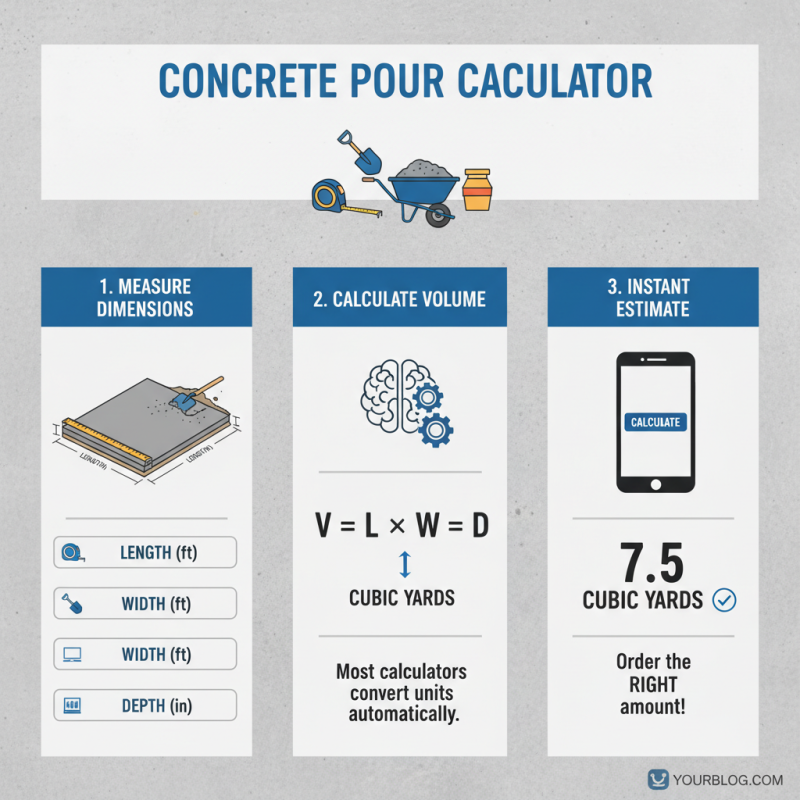
Using a concrete pour calculator is essential for ensuring that you order the right amount of concrete for your project. To use it effectively, start by determining the dimensions of the area you need to fill. Measure the length, width, and depth to calculate the volume in cubic yards. Most calculators allow you to input these measurements directly, providing you with an instant estimate of the amount of concrete needed.
Tips: Always double-check your measurements before inputting them into the calculator. A small mistake in measurement can lead to significant differences in the amount of concrete required, potentially causing delays or extra expenses.
After obtaining your calculation, consider factors like waste and spillage. It’s wise to order a little extra concrete—typically around 10% more than the calculated amount. This cushion helps account for any unforeseen issues that may arise during the pour, such as changes in depth or uneven surfaces.
Tips: Make sure to communicate your calculations clearly with your concrete supplier. Providing them with detailed measurements and any adjustments made will help ensure you receive the correct amount.
Common Mistakes to Avoid When Estimating Concrete Needs
Estimating concrete needs accurately is crucial for any construction project, as miscalculations can lead to increased costs and project delays. One common mistake is underestimating the volume of concrete required. According to industry research, approximately 25% of construction professionals admit to making volume estimation errors, which can result in costly reorders or wasted materials. For instance, using a simple formula like volume = length x width x depth can seem straightforward, but overlooking factors such as sloping surfaces or irregular shapes can significantly skew results.
Another frequent pitfall is failing to account for concrete shrinkage and spillage. The American Concrete Institute emphasizes that concrete can shrink by up to 1% during curing, meaning that a project initially estimated with accurate measurements could fall short if this factor is not considered. Additionally, during the pouring process, up to 10% of concrete might be lost due to spillage and over-excavation. Utilizing a concrete pour calculator not only helps encapsulate these variables but also provides a more precise estimate, allowing contractors to order the right amount of material without unnecessary surplus, promoting both efficiency and cost-effectiveness.
Why You Need a Concrete Pour Calculator for Your Next Project - Common Mistakes to Avoid When Estimating Concrete Needs
| Project Type |
Estimated Volume (Cubic Yards) |
Common Mistakes |
Recommended Action |
| Driveway |
10 |
Underestimating the thickness |
Use a calculator to check thickness |
| Patio |
5 |
Not accounting for edges |
Include edging in your measurements |
| Foundation |
20 |
Failing to consider soil conditions |
Consult with a specialist |
| Sidewalk |
7 |
Ignoring settling and drainage |
Plan for drainage solutions |
| Slab |
15 |
Misjudging area measurements |
Double-check measurements |
Tips for Choosing the Right Concrete Pour Calculator for Your Project
When embarking on a concrete pouring project, selecting the right concrete pour calculator is crucial for ensuring accuracy and cost efficiency. A reliable calculator can help estimate the necessary amount of concrete, taking into account factors such as the dimensions of the area to be filled, the thickness of the pour, and any specific design considerations. According to the Portland Cement Association, proper concrete volume estimation can reduce waste by approximately 10%, significantly impacting project costs and resource management.
When choosing a concrete pour calculator, consider its features and user-friendliness. Look for tools that provide options for various unit conversions, as project requirements may vary significantly. It's also beneficial if the calculator offers additional insights, such as reinforcement needs and curing times that are tailored to the specific type of concrete mix being used. A report from the Concrete Reinforcing Steel Institute indicates that integrating reinforcement details during the planning phase can enhance structural integrity—making calculator functionality that includes this consideration particularly invaluable.
Moreover, accessibility should not be overlooked; selecting a calculator that can be used on multiple devices, including smartphones and tablets, ensures that you can quickly access vital information on-site, reducing delays. According to a survey by the National Ready Mixed Concrete Association, nearly 75% of construction professionals value tools that enhance workflow efficiency, demonstrating that a good concrete pour calculator can facilitate smoother project management while preserving quality.
Concrete Pour Calculator Insights