10 Essential Tips for Perfectly Mixing Concrete for Your Next Project
When embarking on any construction project, the significance of correctly mixing concrete cannot be overstated. According to the Global Concrete Market Report 2023, the concrete industry is projected to reach $1 trillion by 2025, emphasizing the critical importance of quality in this fundamental building material. Properly mixed concrete not only enhances the durability and strength of structures but also contributes significantly to overall project efficiency and cost-effectiveness.
To achieve optimal results, understanding the intricacies involved in how to mix concrete is essential. The textural and chemical properties of concrete can vary widely based on composition and mixing techniques, impacting both short-term performance and long-term sustainability. A well-informed approach can lead to reduced waste and improved structural integrity, aligning with industry standards that prioritize safety and environmental responsibility.
In this guide, we will explore ten essential tips for perfectly mixing concrete that will ensure your next project stands the test of time, emphasizing the best practices that professionals rely on in today’s competitive market.
Choosing the Right Concrete Mix: A Guide to Different Types and Their Uses
When embarking on your next concrete project, selecting the right concrete mix is crucial to achieving the desired strength and durability. Different types of concrete mixes are available, each suited for specific applications. For instance, standard concrete is often used for slabs and foundation work, while high-strength concrete is ideal for structural applications where load-bearing capacity is essential. Additionally, specialized mixes, such as lightweight concrete or fiber-reinforced concrete, cater to unique project requirements, ensuring optimal performance.
Tip 1: Always assess the environmental conditions and the end-use of your project before choosing a mix. For outdoor projects, consider using a mix that includes additives to enhance freeze-thaw resistance.
Tip 2: If working on a project that requires quick setting, look for fast-setting concrete mixes. These can significantly reduce construction time while still providing reliable strength and durability.
By understanding the different types of concrete mixes available, you'll be better equipped to select the right one for your project, ensuring long-lasting results.
Essential Tools and Materials Needed for Mixing Concrete Like a Pro
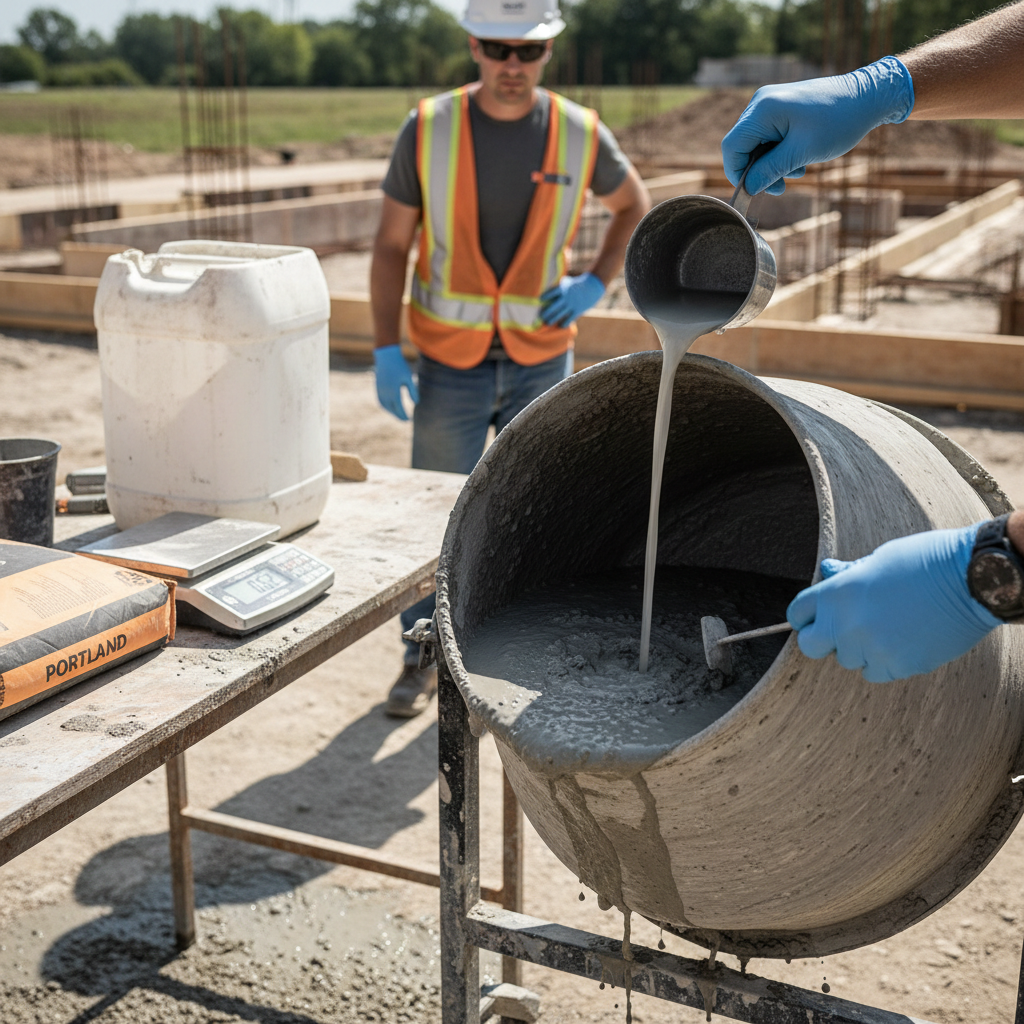
When it comes to mixing concrete like a pro, having the right tools and materials is crucial for achieving optimal results. According to a report by the Portland Cement Association, approximately 50% of concrete failures can be attributed to improper mixing techniques and materials. This underscores the importance of equipping yourself with essential tools before embarking on your project. A sturdy concrete mixer is indispensable; whether you choose a portable one for small jobs or a larger drum mixer for extensive projects, the proper equipment will ensure uniform consistency throughout the mix.
In addition to a mixer, essential materials include high-quality cement, aggregates, and water. The American Concrete Institute recommends using clean, well-graded aggregates to enhance the strength and durability of the mix. The ideal water-to-cement ratio is crucial; based on industry standards, keeping this ratio around 0.5 will help maintain the balance between workability and strength. Always remember to utilize additives when necessary, as they can improve performance characteristics such as setting time and resistance to environmental factors. With the right tools and materials, your concrete mixing will not only be easier but also yield professional-grade results.
Step-by-Step Instructions for Achieving the Perfect Concrete Consistency
Mixing concrete to achieve the perfect consistency is crucial for the success of any construction project. According to the American Concrete Institute, optimal concrete consistency not only enhances durability but also ensures structural integrity. To begin, measure your materials accurately, using the right mix of cement, water, sand, and aggregates. A common industry guideline suggests a typical concrete mix ratio of 1:2:3 (cement:sand:aggregate) by volume to attain a reliable consistency. Pay attention to the water-to-cement ratio as well; studies indicate that a 0.4 to 0.6 ratio yields the ideal strength while maintaining workability.
Once the materials are prepared, the mixing process should be methodical. Begin by combining the dry ingredients thoroughly, followed by the addition of water. It’s vital to mix the batch until achieving a uniform consistency, where the concrete is moist but not overly runny. Discard any mixture that is too wet, as this can compromise the concrete’s strength during curing. For best results, consider using a mechanical mixer, which has been shown to produce a more consistent outcome compared to manual mixing, ultimately leading to enhanced performance in structural applications. Following these step-by-step instructions will ensure a successful mixing process, contributing to the longevity and reliability of your concrete work.
Common Mistakes to Avoid When Mixing Concrete and How to Correct Them
Mixing concrete may seem straightforward, but several common mistakes can compromise the integrity of your project. One frequent error is the improper ratio of water to cement. The American Concrete Institute suggests a water-cement ratio of no more than 0.5 to achieve optimal strength. Exceeding this ratio can lead to weaker concrete that is prone to cracking and damage. It's essential to measure accurately and mix uniformly to avoid this pitfall.
Another common mistake is neglecting to mix the concrete for the appropriate duration. Industry standards recommend a minimum mixing time of about 3 to 5 minutes, depending on your mixer type and capacity. Insufficient mixing can lead to inconsistent texture and strength characteristics within the batch, affecting the long-term durability. Ensuring that each component—cement, aggregate, and water—is thoroughly combined will promote a uniform mix essential for structural soundness. Proper attention to these details can make a significant difference in the success of your concrete project.
Tips for Curing Concrete Effectively to Ensure Long-Lasting Strength and Durability
Curing concrete is a critical phase in any construction project, as it significantly influences the material's strength and durability. According to the American Concrete Institute, proper curing can enhance the compressive strength of concrete by up to 50%. This process involves maintaining adequate moisture, temperature, and overall environment to allow the concrete to gain strength effectively. In environments where temperatures fluctuate or are excessively high, the risk of rapid evaporation can lead to surface cracking and weaken the overall integrity of the mix.
To ensure effective curing, experts recommend a minimum of 7 days of moisture retention for standard concrete. Utilizing curing compounds, wet burlap, or moisture-retaining mats can help maintain the necessary moisture levels. Additionally, in high-temperature conditions, it’s essential to keep the concrete temperature in check, ideally below 70°F, to prevent premature drying. Implementing these techniques not only maximizes the performance of your concrete mix but also helps in achieving long-lasting durability, reducing the likelihood of future repairs and associated costs. By observing these curing practices, you can ensure that your concrete stands the test of time.