How to Mix On Site Concrete for Perfect Results?
Mixing concrete on site can seem daunting. However, with the right knowledge, you can achieve perfect results. The process of mixing on site concrete offers flexibility. You control the proportions of ingredients, ensuring quality and consistency.
When you mix concrete on site, consider the materials you use. Fresh aggregates, proper cement types, and clean water are essentials. Each of these components impacts durability and strength. Mixing requires attention to detail. Many beginners overlook measurements or mix times, resulting in subpar outcomes.
There are challenges to this method. Weather conditions can affect drying times. A hot day may cause rapid evaporation. Conversely, rain can compromise your mix. Reflecting on these factors can help improve your technique. Watching for signs of a poor mix, like cracking, is crucial. Mixing on site is an art, and learning from mistakes will lead you to better results.
Choosing the Right Materials for On-Site Concrete Mixing
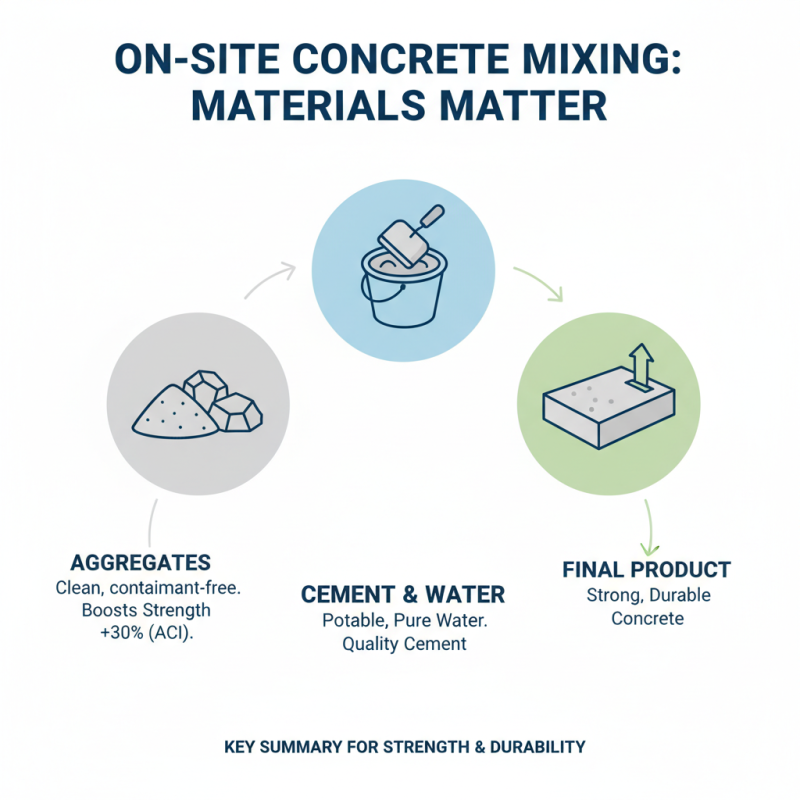
When mixing concrete on-site, the choice of materials is crucial. The right aggregates, cement, and water can significantly influence the final product's strength and durability. According to the American Concrete Institute, using high-quality aggregates can boost compressive strength by up to 30%. It’s important to select aggregates that are clean and free from contaminants. Likewise, the water used should be potable and free of impurities.
Cement type matters too. For instance, Portland cement is commonly used due to its availability and strength. However, it’s not always ideal for every situation. In climates with extreme temperatures, special blended cements might be necessary. Misjudging this choice can lead to issues like cracking or reduced lifespan. Pay attention to the mix proportions as well. The typical ratio is 1:2:3 for cement, sand, and gravel. But variances may be needed, depending on specific job requirements.
One must not overlook the water-cement ratio. Research shows that too much water weakens concrete structure, reducing its longevity. Finding the right mix can be challenging, especially in unpredictable weather conditions. Rain can diminish material quality. On-site mixing demands careful planning and real-time adjustments. Always be ready to adapt and learn from past projects.
Essential Tools and Equipment for Mixing Concrete on Site
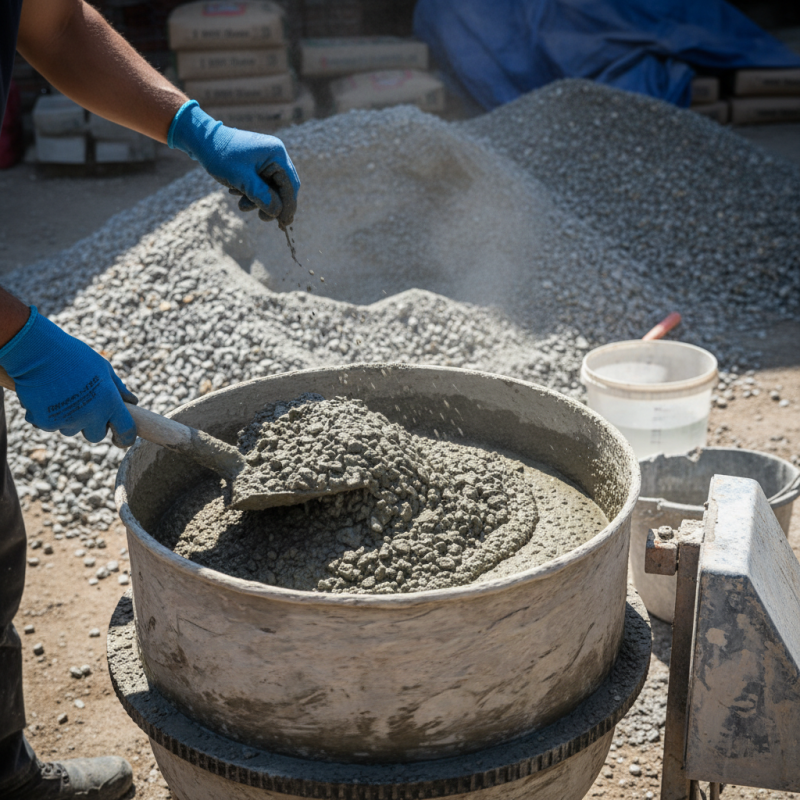
When mixing concrete on-site, having the right tools is crucial for achieving perfect results. Key equipment includes a concrete mixer, shovel, and wheelbarrow. A mixer will ensure an even blend of materials, while the shovel helps in moving and adjusting the mix. A sturdy wheelbarrow is essential for transporting the concrete where it is needed.
Tips for mixing concrete: Ensure that your mixer is clean before use. Contaminants can affect the mix quality. Measure materials accurately to achieve the desired consistency. Too much water can weaken the final product. Additives may help with durability but should be used sparingly.
Another important tool is a tamper. It helps compact the concrete effectively. This can lead to better strength and reduce air pockets. Pay attention to the curing process. Leaving concrete uncovered for too long can result in cracks. Noticing these details can make a significant difference in your project. Strive for improvement with each mix.
How to Mix On Site Concrete for Perfect Results? - Essential Tools and Equipment for Mixing Concrete on Site
| Tool/Equipment |
Description |
Importance |
Recommended Size/Capacity |
| Concrete Mixer |
A machine that mixes concrete by rotating galvanized drum. |
Essential for uniform concrete mixing. |
3-5 cu ft capacity |
| Shovel |
A tool for manual mixing and transferring materials. |
Important for smaller mixes and adjustments. |
Standard size (long handle) |
| Concrete Bucket |
Used to transport mixed concrete to the site. |
Facilitates easy pouring and movement of concrete. |
Capacity of 5-10 gallons |
| Mixing Hoe |
A tool to manually mix concrete in small batches. |
Useful for precision in small projects. |
Standard size (with a long handle) |
| Gloves and Safety Gear |
Personal protective equipment for safety while mixing. |
Critical for preventing injuries. |
N/A |
Step-by-Step Guide to Mixing Concrete Properly
Mixing concrete on-site can seem daunting, but with a proper guide, it can yield perfect results. Start by gathering all materials: cement, sand, gravel, and water. The standard mix ratio is usually 1 part cement, 2 parts sand, and 3 parts gravel. However, this can vary depending on your project’s requirements. A well-prepared mix should achieve a compressive strength of around 25 MPa after 28 days.
When mixing, use a clean container. Avoid rusty or dirty tools as they may contaminate the mix. Begin by adding dry ingredients first. Combine them well before introducing water. Too much water weakens the concrete, while too little makes it hard to work with. Aim for a consistency similar to thick oatmeal.
Tips: Always wear protective gear. Concrete can be harsh on skin and lungs. Check weather conditions before pouring. Rain can ruin your mix. If you make mistakes, don’t panic. Every mix is a learning opportunity. Reflect on the ratios and results. Adjust accordingly for your next project.
Common Mistakes to Avoid When Mixing Concrete
Mixing on-site concrete can be tricky. Many people make common mistakes that can lead to poor results. One frequent error is not measuring the water properly. Too much water makes the mix weak, while too little leads to dry spots. It's essential to find the right balance for a strong, durable finish.
Another mistake is not mixing thoroughly. Inadequate mixing can result in clumps of dry material or uneven consistency. Each component must be fully blended for the best results. Using the wrong tools can worsen the situation. A shovel might not mix concrete properly, leading to frustrations down the line.
Keep an eye on the weather. Mixing concrete in extreme temperatures can affect curing. Hot conditions may cause rapid drying, while cold can slow the process. Both scenarios can compromise the final product. Reflecting on these details can help improve your concrete mixing skills. Remember, practice makes perfect!
Tips for Achieving the Perfect Concrete Consistency
Achieving the perfect concrete consistency requires careful attention. The right mix ensures strength and durability. Start with the right water-to-cement ratio. Too much water makes the mix weak. Too little can lead to cracking. Aim for a balance that keeps the mixture workable yet firm.
When mixing on-site, be mindful of environmental factors. Temperature and humidity can affect curing times. During hot days, consider using chilled water. On cooler days, warm the materials slightly. These adjustments can help maintain consistency. It's important to adjust your approach based on conditions.
Don’t rush the mixing process. An inconsistent mix can lead to future issues, like uneven surfaces. Always test a small batch. Reflect on the results before proceeding. Small changes can make a big difference. Keep learning from each project. Perfecting your mix will take time and experience.