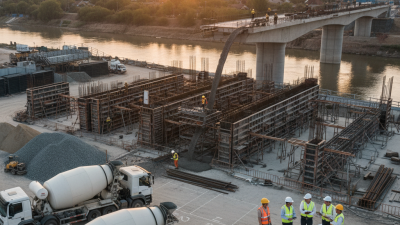
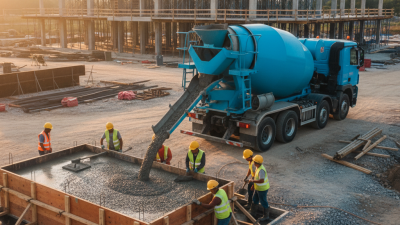
Concrete rarely announces its importance. It arrives in rotating drums, often before sunrise, and becomes bridges, hospitals, towers, and roads. The Global Cement and Concrete Association reports that roughly 14 billion cubic metres of concrete are produced worldwide each year. That scale makes ready mix concrete delivery a critical construction service, not merely a transport task.
Delivery performance depends on more than fleet size. Batch-plant location, traffic prediction, drum rotation, dispatch software, weather, and site access can determine whether a pour succeeds. Colin Lobo, a senior technical expert at the National Ready Mixed Concrete Association, has described ready-mixed concrete as a “perishable product,” highlighting the narrow window between production and placement. The American Concrete Institute similarly stresses controlled handling, testing, and placement practices throughout concrete operations.
This ranking examines ten leading companies serving international or major regional markets. It considers geographic reach, production capacity, digital dispatch systems, fleet reliability, sustainability initiatives, and customer experience. Industry reports from GlobalData, Fortune Business Insights, and the GCCA indicate continuing demand from urbanisation, infrastructure renewal, and data-centre construction. Yet comparisons remain imperfect. Companies disclose different metrics, and “global” may mean direct operations, partnerships, or brand presence.
That distinction matters. A large fleet cannot guarantee a reliable pour in every city. Local expertise still decides the final few kilometres. This list is therefore a researched guide, not an absolute verdict. Readers should verify current plant coverage, certifications, response times, and project references before choosing a supplier.
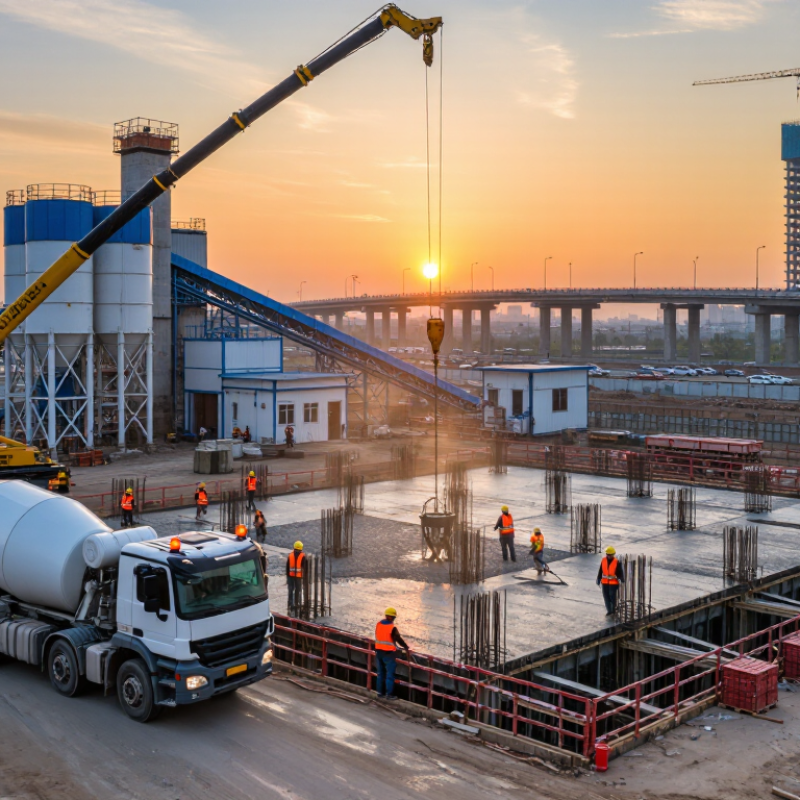
Ready mix concrete delivery companies produce and transport concrete mixed to a project’s specified design. Their service usually begins with material selection, proportioning, and batch control. It continues through dispatch, truck loading, delivery, and placement coordination. These companies serve housing projects, bridges, roads, factories, and smaller commercial sites.
The scope is broader than sending a mixer truck to a construction gate. A professional provider checks cement, aggregates, water, and approved admixtures before batching. Technicians may review slump, concrete temperature, and delivery time at the site. Batch tickets create a traceable record of the mixture, quantity, and destination. Dispatch teams also manage truck spacing, traffic risks, pump access, and changing pour rates.
Timing matters greatly. Concrete can lose workability during long journeys or unexpected site delays. Weather creates another variable, especially during hot afternoons or sudden rain. Experienced teams adjust planning, but not every problem can be prevented. The category is not perfectly clear, either. Some companies only manufacture concrete, while others arrange transport through independent hauliers. Others provide pumping, testing, and placement support as part of one contract. Buyers should examine technical capacity, local delivery coverage, quality procedures, equipment condition, and communication practices. A low price may hide limited scheduling flexibility or weak site support. Field experience shows that small details, such as a blocked entrance or missing washout area, can disrupt an otherwise well-designed pour.
Ready mix concrete delivery companies produce or distribute proportioned concrete from a batching facility and transport it to a construction site in a fresh, workable condition. The scope commonly includes batching, quality control, truck-mixer logistics, scheduled or on-demand delivery, pump coordination, technical support, and compliance with applicable regional concrete standards.
| Rank | Anonymized Provider Profile | Primary Operating Region | Typical Operating Scale | Delivery and Dispatch Model | Core Product and Service Scope | Typical Mixer Capacity | Common Delivery Radius | Quality and Compliance Practices |
|---|---|---|---|---|---|---|---|---|
| 1 | Profile A Global-scale network |
North America and selected international markets | Multi-country network with regional batching plants | Central dispatch, digital order scheduling, GPS fleet monitoring, and project-based delivery windows | General-purpose concrete, high-strength mixes, low-slump concrete, flowable fill, pump-ready mixes, and large-project logistics | 6–10 m³ per truck | 15–40 km from plant, subject to traffic and project conditions | Batch ticket traceability, laboratory testing, calibrated weighing systems, and regional concrete standards |
| 2 | Profile B Global-scale network |
Western Europe and selected overseas markets | Large national or multinational plant network | Planned delivery slots supported by automated batching and fleet coordination | Structural concrete, pavement concrete, self-compacting concrete, fiber-reinforced mixes, and lower-carbon formulations | 6–9 m³ per truck | 10–35 km from plant | Factory production control, mix-design documentation, strength testing, and conformity assessment under applicable European requirements |
| 3 | Profile C Large regional network |
East Asia and Southeast Asia | Large metropolitan and infrastructure-focused network | High-volume dispatch for rail, road, airport, commercial, and residential projects | Standard structural mixes, high-durability concrete, marine-grade concrete, mass concrete, and temperature-controlled placements | 5–10 m³ per truck | 10–30 km from plant | On-site sampling, slump and temperature checks, compressive-strength testing, and project-specific inspection plans |
| 4 | Profile D Large regional network |
Australia and New Zealand | National or multi-state network with urban batching facilities | Pre-booked project deliveries combined with short-notice urban dispatch | Residential concrete, commercial slabs, civil works, decorative concrete, low-shrinkage mixes, and pump-placement support | 4–8 m³ per truck | 15–35 km from plant | Documented mix designs, delivery dockets, sampling procedures, and compliance with applicable national standards |
| 5 | Profile E Large regional network |
Middle East | Large urban network serving high-rise and infrastructure projects | Dedicated project fleets, night deliveries, priority dispatch, and coordination with concrete-pump operators | Hot-weather concrete, high-strength concrete, rapid-setting mixes, self-compacting concrete, and foundation-grade concrete | 6–10 m³ per truck | 10–30 km from plant, with shorter limits in extreme heat | Temperature monitoring, chilled-water or ice management where required, batch traceability, and frequent field testing |
| 6 | Profile F National-scale network |
Latin America | National or multi-city network concentrated around major urban areas | Combination of telephone, web, and mobile dispatch with project-volume planning | General construction concrete, infrastructure mixes, masonry grout, controlled low-strength material, and ready-to-pump concrete | 5–8 m³ per truck | 10–30 km from plant | Routine slump testing, cylinder or cube sampling, batch records, aggregate moisture controls, and site delivery documentation |
| 7 | Profile G National-scale network |
South Asia | City-based network with high-density plant coverage | High-frequency dispatch for residential towers, commercial buildings, roads, and public works | Normal-strength concrete, high-strength concrete, pumpable mixes, pile concrete, raft-foundation concrete, and rapid-placement services | 4–8 m³ per truck | 8–25 km from plant | Batch-plant calibration, aggregate grading checks, workability testing, strength monitoring, and project quality records |
| 8 | Profile H National-scale network |
Central and Eastern Europe | Multi-city network linked to urban construction markets | Scheduled deliveries with route optimization and coordinated pump placement | Structural concrete, winter concreting mixes, durable pavement concrete, precast supply mixes, and low-permeability concrete | 6–9 m³ per truck | 10–30 km from plant | Production control, material certificates, batch documentation, strength-class verification, and temperature protection in cold weather |
| 9 | Profile I Regional specialist |
Africa | Regional network concentrated around major cities and infrastructure corridors | Project-based delivery with mobile batching or satellite plants for remote construction sites | General structural concrete, road and bridge concrete, foundation concrete, mass concrete, and site-specific engineered mixes | 5–8 m³ per truck | 10–40 km from plant; longer distances may use temporary plants | Material source verification, field slump checks, strength testing, batch tickets, and project-specific quality assurance procedures |
| 10 | Profile J Regional specialist |
Small island markets and remote regions | Local or regional plant serving a defined construction catchment | Pre-arranged deliveries, limited fleet scheduling, and direct coordination with contractors | Residential and commercial concrete, repair concrete, small-batch orders, pump mixes, and customized site formulations | 3–7 m³ per truck | 5–25 km from plant | Basic batch records, aggregate and cement verification, workability checks, delivery-time monitoring, and local regulatory compliance |