Why Choose Ready Made Concrete for Your Construction Needs?
In the ever-evolving construction industry, the choice of materials can significantly impact project outcomes. Experts agree that "ready made concrete" stands out as a top choice for many builders. According to John Simmons, a renowned civil engineer with over 20 years of experience, "Ready made concrete offers unmatched reliability and efficiency in construction projects." This sentiment encapsulates why many choose this option for their construction needs.
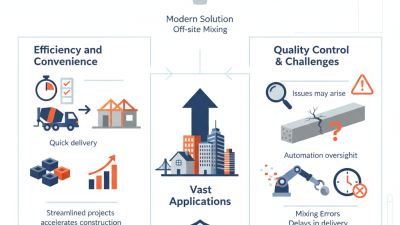
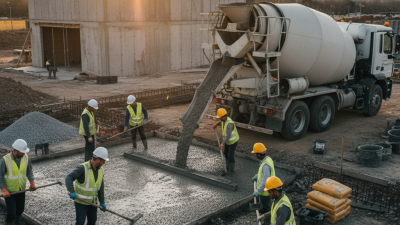
Ready made concrete provides several advantages over traditional concrete mixing methods. It ensures consistent quality, which is crucial for structural integrity. The use of advanced technology allows for precise control over the mix design. Furthermore, it offers significant time savings, enabling construction teams to meet tight deadlines. Builders appreciate the convenience of having concrete delivered right to their site, minimizing delays and labor costs.
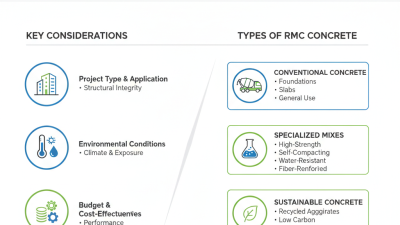
However, not all applications may benefit equally from ready made concrete. Certain projects may require bespoke mixes to meet specific performance criteria. Therefore, it's essential to weigh these factors carefully. Ensuring that ready made concrete fits the requirements of your project can lead to successful outcomes, yet it may not always be the perfect solution for every scenario.
Benefits of Ready Made Concrete in Modern Construction
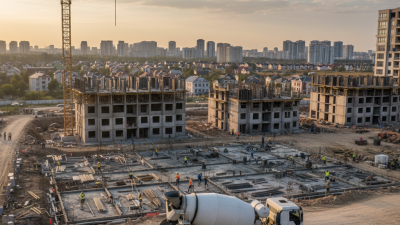
Ready-made concrete has become increasingly popular in modern construction. Its convenience is a key advantage. Construction teams can save time by using pre-mixed concrete delivered to the site. This allows for quicker project completion. In busy urban areas, where time is money, every minute counts. Ready-made concrete can help meet tight deadlines.
Another benefit is the consistency in quality. Ready-made concrete is produced under controlled conditions. This ensures uniformity in composition and strength. Builders can rely on it to meet specific engineering standards. However, imperfections in mixes can occur, and it’s crucial to choose a reliable supplier. Ensuring the right mix design requires diligence, as it affects durability.
Cost-effectiveness is another aspect worth noting. Using ready-made concrete can lower labor costs. Fewer workers are needed for mixing on-site. Yet, these savings may vary based on project size and distance from the supplier. It’s essential to evaluate each project individually. Thoughtful planning is necessary to maximize benefits while considering local factors.
Benefits of Ready Made Concrete in Modern Construction
The chart illustrates five key benefits of using ready made concrete in modern construction, quantifying advantages such as cost efficiency, time savings, quality control, reduced labor needs, and sustainability, all rated on a scale of 100.
Cost-Effectiveness of Ready Made Concrete Solutions
Ready made concrete offers significant cost benefits for construction projects. According to the National Ready Mixed Concrete Association, using ready mixed concrete can reduce labor costs by up to 30%. This is primarily due to the decrease in time spent on-site for mixing and preparation. Construction schedules become tighter, allowing for faster project completion.
In addition, ready made concrete reduces waste. A report from Research and Markets states that nearly 25% of on-site mixed concrete is wasted during the pouring process. With ready made solutions, the exact mix is delivered. This efficiency translates to savings that can be redirected to other project areas.
However, relying solely on ready made concrete may not suit every application. There are scenarios where custom mixes are required to meet specific load-bearing or environmental conditions.
It's essential to consider the trade-offs. While ready mixed solutions simplify logistics, they may limit flexibility in mix design. Each project has unique demands, and understanding these requirements is crucial. Therefore, the decision should weigh both cost-effectiveness and the specific needs of the construction task.
Environmental Considerations in Using Ready Made Concrete
Ready made concrete is increasingly popular in construction. This trend stems from its numerous environmental benefits. According to a report by the Global Cement and Concrete Association, concrete production accounts for about 8% of global CO2 emissions. However, ready made concrete can reduce waste and energy use in construction.
Using ready made concrete reduces the amount of raw materials needed. This production method uses precise mixes, which leads to less over-ordering and waste. A study from the University of Cambridge found that optimizing concrete mixtures can decrease emissions by 20% per cubic meter. This is significant for a sustainable future.
Tip: Consider the local sourcing of concrete. Reducing transportation distances decreases emissions. Engage with local suppliers to minimize the carbon footprint.
The impact of ready made concrete extends to resource conservation. The production process can be powered by renewable energy sources, further reducing environmental harm. However, it’s essential to reflect on using high-quality materials. Poor-quality mixes can lead to durability issues, which may increase resource use over time. Sustainable construction practices must involve careful selection of materials to truly benefit the environment.
Why Choose Ready Made Concrete for Your Construction Needs? - Environmental Considerations in Using Ready Made Concrete
| Aspect |
Detail |
| Production Efficiency |
Reduced time and labor costs due to prefabrication |
| Material Consistency |
High-quality control results in uniform products |
| Waste Reduction |
Less material waste compared to traditional methods |
| Reduced Carbon Footprint |
Localized production leads to lower transport emissions |
| Thermal Performance |
Improved energy efficiency in buildings |
| Durability |
Long-lasting materials reduce the need for repairs |
| Recyclability |
Concrete can be crushed and reused for future projects |
Quality Control and Consistency in Ready Made Concrete Production
Ready-made concrete is becoming a popular choice for construction, primarily due to its stringent quality control and uniformity. The production process typically adheres to established standards, such as those set by the American Concrete Institute (ACI). This ensures that every batch of concrete meets the same high-performance criteria. A report by the Portland Cement Association indicates that using ready-made concrete can enhance a project’s overall sustainability, significantly reducing waste and improving energy efficiency.
Quality control begins at the raw material stage. Each component—cement, aggregates, water—must be precisely measured and tested. Adhering to these specifications can lead to a concrete strength that exceeds industry standards, often achieving compressive strengths of 4,000 psi and above. Consistency is vital; variations can lead to structural issues. A study published in the Journal of Materials in Civil Engineering pointed out that inconsistent mixes could reduce the lifespan of structures by nearly 20%. This highlights the importance of using reliable suppliers who prioritize quality.
However, not all ready-made concrete solutions are equal. Some manufacturers may cut corners or overlook essential testing. It's crucial for builders to verify third-party certifications. The process may not always be perfect, leading to potential supply chain challenges or delays. While ready-made options save time, they're not immune to flaws. Regular audits and inspections are necessary to maintain quality and consistency across projects, ensuring the reliability that the construction industry demands.
Versatility of Ready Made Concrete for Various Projects
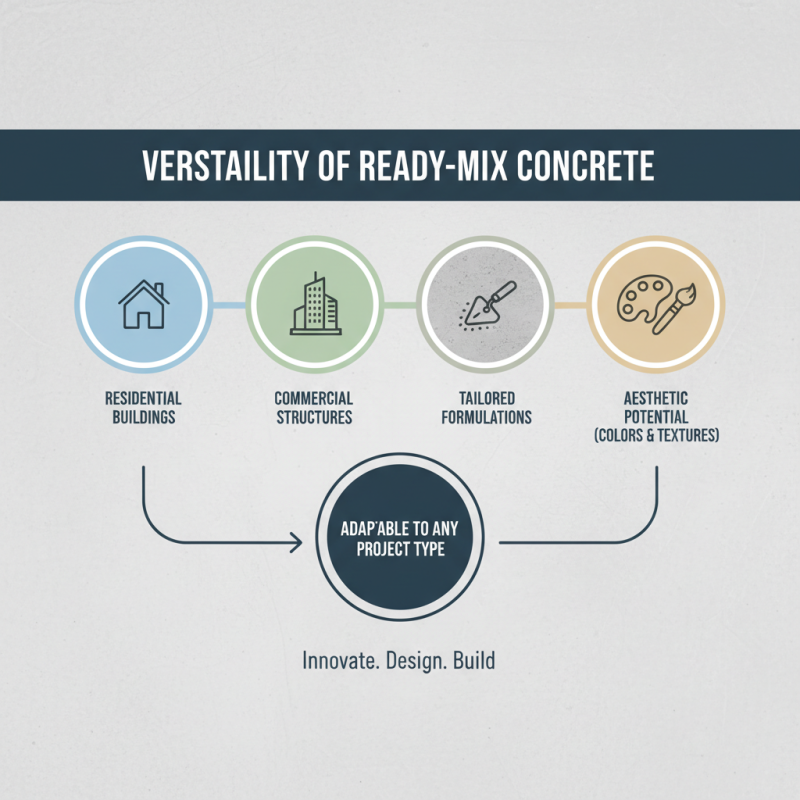
Ready-made concrete stands out due to its remarkable versatility. This material can adapt to numerous construction projects, from residential buildings to commercial structures. Its different formulations allow for tailored applications. Designers and architects appreciate its aesthetic potential. Colors and textures can enhance the visual appeal of any structure.
In addition to aesthetics, ready-made concrete offers functionality. It works well for floors, pavements, or walls, providing durability and low maintenance. However, it’s essential to consider site conditions. Sometimes, ready-made concrete may not suit every unique requirement. Factors like weather or soil type are crucial for optimal performance.
Sustainability is another aspect worth mentioning. While ready-made concrete can be eco-friendly, its carbon footprint is a topic of debate. Using recycled materials can mitigate some environmental concerns. Hence, weighing the benefits against potential drawbacks is important. Evaluating your project’s needs can lead to better construction outcomes. Ready-made concrete truly has much to offer when used thoughtfully.