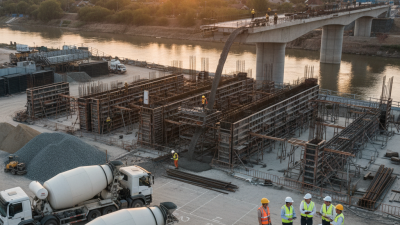
Choosing the best ready mix cement delivery supplier in China requires more than comparing prices. Reliable performance depends on material quality, batching accuracy, delivery distance, and site coordination. A supplier may offer low rates, yet delayed trucks can leave fresh concrete waiting beside a congested road.
Colin Lobo, former Executive Vice President of the National Ready Mixed Concrete Association, said, “Concrete quality is dependent on the quality of the ingredients and the production process.” This principle remains practical. Buyers should examine cement sources, aggregate grading, water control, laboratory testing, and mixer-truck maintenance. Ask for batch records, strength-test results, and clear delivery schedules. Do not rely on impressive brochures alone.
Timing matters greatly. A dependable ready mix cement delivery team confirms the pour volume, truck intervals, pump access, and weather conditions before dispatch. On a busy urban project, a thirty-minute delay can create cold joints, labor downtime, and expensive repairs. Experienced suppliers also keep contingency plans for traffic disruption, equipment failure, and sudden rain.
Still, no supplier is perfect. Communication gaps can occur, and promised delivery windows may prove optimistic. This is where careful verification matters. Speak with recent customers. Visit the batching plant if possible. Check whether technical staff respond clearly, not merely quickly. The strongest Chinese suppliers combine consistent concrete production with honest limitations, documented quality control, and practical site experience. Price is important, but predictable delivery often protects the entire project budget.

Ready-mix cement delivery usually refers to ready-mix concrete delivery. The material is produced at a batching plant, then transported to a construction site in rotating mixer trucks. Cement binds measured quantities of sand, stone, water, and approved admixtures. This controlled process helps maintain consistent strength and workability.
Delivery timing matters because concrete begins changing soon after mixing. A supplier should confirm the required grade, volume, slump, pouring method, and site address before dispatch. The truck route also needs checking. Narrow gates, weak roads, traffic delays, or limited unloading space can disrupt placement. Keep the access area clear.
Not every load behaves perfectly.
Weather affects the material. Hot conditions may reduce workable time, while rain can alter the surface water balance. Site workers should check the delivery ticket, inspect the concrete visually, and conduct agreed quality tests when required. Adding water without technical approval can weaken the finished structure. It is a common mistake, yet it still happens.
Reliable delivery depends on more than arriving on time. The batching records, truck condition, driver communication, and on-site supervision all matter. A small error in volume may leave a slab incomplete. An overly long delay may create joints between pours. Careful coordination reduces these risks, although even experienced teams should review what went wrong after each project.
A practical comparison table for selecting ready-mixed concrete delivery services in China
| Evaluation Dimension | What Ready-Mix Delivery Means | Typical Reference Data | Buyer Checklist |
|---|---|---|---|
| Product Definition | Ready-mixed concrete is a factory-produced mixture of cementitious materials, aggregates, water and, when required, chemical or mineral admixtures. “Ready-mix cement” is commonly used in informal searches, although the delivered product is usually concrete. | Concrete is batched at a mixing plant and transported to the jobsite in an agitator truck. | Confirm whether the quotation is for concrete, dry cement, mortar or grout before ordering. |
| Applicable Chinese Standards | Quality, production and delivery requirements should be matched to the applicable Chinese construction standards and project specifications. | GB/T 14902 covers ready-mixed concrete; GB 50164 covers concrete quality control. Projects may also specify additional design and testing requirements. | Ask for standard references, mix-design documents, test reports and delivery tickets. |
| Strength Grade | The strength grade indicates the specified compressive strength class of the concrete at the required testing age, subject to the project specification. | Common structural grades include C20, C25, C30, C35, C40 and C50. Higher grades are available for specialized work. | Order by design grade, exposure condition, durability requirement and required testing age—not by strength alone. |
| Slump and Workability | Slump describes the consistency and workability of fresh concrete. The correct value depends on reinforcement, placement method, pumping and weather. | Typical project requirements may fall around 80–180 mm, while self-compacting concrete uses different flowability tests. | Specify target slump, allowable tolerance and whether slump retention or pumpability is required. |
| Truck Capacity | Agitator trucks keep the concrete mixed during transport and discharge. Actual payload depends on the vehicle, mix density, road restrictions and local regulations. | A practical market reference is approximately 6–12 m³ per agitator truck. | Confirm truck volume, site access, turning radius, unloading height and legal road restrictions. |
| Delivery Scheduling | Delivery is normally scheduled in sequence so trucks arrive continuously enough to avoid cold joints while preventing excessive site congestion. | Dispatch intervals are project-specific and affected by traffic, plant distance, pour rate and site unloading speed. | Request a pour plan, estimated arrival intervals, emergency contact and delay-management procedure. |
| Transport and Discharge Time | Fresh concrete must be transported, discharged, placed and compacted within the project’s approved time and workability limits. | Many specifications use a controlled discharge window; a commonly referenced international limit is about 90 minutes unless the approved mix and conditions allow otherwise. | Use the project specification and approved mix design. Do not add water on site without authorization. |
| Pumping Service | Concrete may be discharged directly or supplied through a line pump or boom pump when access, height or placement distance requires it. | Common boom-pump configurations may use approximately 28–56 m boom lengths, subject to equipment availability and site conditions. | Check pump reach, pipeline routing, power-line clearance, setup area, washout location and standby charges. |
| Quality Documentation | Traceability links each load to its mix designation, production time, materials, quantity and delivery location. | Typical records include mix-design approval, batch records, delivery tickets, slump checks, temperature records and compressive-strength test results. | Require documentation before the pour and retain signed delivery tickets for project records. |
| Ordering Information | A complete order allows the plant and dispatch team to match the concrete, equipment and delivery sequence to the construction activity. | Required information normally includes volume, strength grade, slump, aggregate size, exposure class, placement method, delivery address and pour date. | Provide site contact details, access restrictions, unloading arrangements and minimum notice for changes. |
| How to Compare Suppliers | The best delivery service is not necessarily the lowest-priced option; it should reliably meet the approved mix, schedule, documentation and site-safety requirements. | Compare quality control, plant-to-site distance, fleet capacity, pump availability, dispatch reliability, testing support, wastage policy and total delivered cost. | Obtain written quotations with unit, minimum order, transport, pumping, waiting-time, cancellation and tax terms clearly separated. |
Choosing China’s best ready-mix cement delivery suppliers requires more than comparing quotations. On a real project, delivery time affects placement, labor, and surface quality. Ask how the supplier controls batching, loading, and truck dispatch. Request the mix design, material sources, production capacity, and recent test records. A reliable supplier should explain slump, strength, setting time, and temperature control clearly. Vague answers deserve caution.
Check experience with projects similar to yours, including distance, climate, and daily volume. Review independent laboratory results when possible. Verify calibration records for weighing and testing equipment. Ask for batch tickets showing production time, mix code, truck number, and discharge time. Visit the plant if schedules allow. Clean aggregate storage, covered cement silos, and orderly traffic routes reveal more than polished brochures.
Delivery reliability needs a written plan. Confirm lead time, minimum order, acceptable delay, rejected-load procedures, and backup arrangements. Speak with recent customers, not only references selected by sales staff. The lowest price can hide weaker controls or costly delays. Documents help, but they do not guarantee consistent concrete. I once treated certificates as proof of performance; that assumption was too simple. Trial batches, site pours, and independent testing provide stronger evidence. A supplier willing to discuss failures may be more dependable than one promising perfection.
Reliable ready-mix cement delivery begins with accurate batching and realistic scheduling. Professional suppliers review drawings, pour volume, access roads, weather, and placement equipment before dispatch. The American Concrete Institute’s ACI 304R guidance emphasizes controlled transport and placement to protect concrete quality. Delivery teams should also monitor truck timing, slump, temperature, and batch records at the site.
Timing changes everything. A strong supplier coordinates mixers, pumps, and trained site technicians through one communication channel. The team can adjust dispatch intervals when traffic or weather disrupts the plan. It can also recommend admixtures when longer travel distances affect workability.
ASTM C94 commonly uses a 90-minute discharge limit, unless approved adjustments apply. However, this limit is not a substitute for testing. Field conditions remain unpredictable.
Quality evidence matters. Suppliers should provide mix designs, test results, delivery tickets, and corrective-action records. Independent testing can verify compressive strength and consistency.
The Global Cement and Concrete Association reports that concrete contributes roughly 7–8% of global carbon dioxide emissions. Therefore, responsible delivery services may support lower-carbon mixes, recycled aggregates, and reduced idling. These options need engineering review, not attractive marketing.
Small details matter. A missed access check can delay an entire pour. Even experienced teams sometimes underestimate this risk.
Choosing China-based ready-mix cement delivery suppliers requires more than comparing prices. Quality begins with controlled raw materials, verified mix designs, and consistent batching records. Ask for recent compressive-strength reports, aggregate tests, and cement certificates from accredited laboratories. Check whether production follows recognized standards, such as ASTM C94 or EN 206, where applicable.
Logistics can decide whether good concrete reaches the site in usable condition. Confirm truck capacity, dispatch schedules, route planning, and backup vehicles before signing. Each load should carry a batch ticket showing mixing time, quantity, water added, and destination. Site staff should check slump, temperature, and delivery time on arrival. Concrete delayed in traffic may lose workability, even when the original mix was correct. Small details matter.
Compliance records also deserve careful review. Suppliers should provide business licenses, quality-management documentation, equipment calibration records, and legally required transport papers. Confirm local environmental rules for washout water, dust control, and vehicle cleaning. Do not accept vague claims like “international quality.” Request traceable evidence. A perfect checklist does not exist. Project conditions change, and even experienced teams can miss a document or overlook weather risks. Independent inspection may add cost, but it can reveal weak testing practices before they affect structural performance. Reliable communication is practical evidence: unanswered technical questions often signal future delivery problems.
Characteristic cube compressive strength benchmarks for common concrete grades. Higher grades indicate greater specified strength, but supplier selection should also verify production quality, delivery control, testing records, and regulatory compliance.
Reference basis: C30, C40, and C50 represent characteristic cube compressive-strength grades of approximately 30, 40, and 50 MPa. Actual project requirements must follow the approved design documents and applicable standards.
Choosing a ready mix cement supplier in China requires more than comparing prices. Check production capacity, material testing, delivery coverage, and project experience. A dependable supplier should provide clear mix designs, batch records, and quality certificates. Ask how aggregates, cement, and additives are stored. Clean storage areas reduce contamination risks. Review previous projects with similar volumes, structures, and site conditions.
Delivery performance matters just as much. Confirm truck capacity, dispatch schedules, travel times, and backup plans for traffic or equipment failure. Request trial batches before placing a large order. Test slump, strength, and setting behavior with an independent laboratory when possible. A small sample can reveal a costly problem. Communication also deserves attention. Your supplier should answer technical questions directly and report delays early, not after trucks are already late.
Tips: Define the required strength, slump, pour volume, and delivery window in writing. Ask for a named quality manager and an emergency contact. Compare complete costs, including pumping, waiting time, testing, and rejected loads. Do not select the lowest quote automatically. It may exclude important controls. One detail is easy to miss: confirm whether the supplier can maintain consistent quality during peak construction periods. Even experienced teams sometimes overlook this point. Recheck your assumptions before signing.