How to Use a Concrete Volume Calculator?
Concrete projects rarely fail because someone cannot mix cement, sand, stone, and water. They fail when measurements are rushed. A small error beneath a patio can become an expensive shortage, a cold joint, or wasted material. That is why a concrete volume calculator matters before the truck arrives.
The Global Cement and Concrete Association reports that the world uses roughly 14 billion cubic metres of concrete each year. The U.S. Geological Survey also recorded about 4.1 billion metric tonnes of cement production worldwide in 2023. These figures show the scale of the industry, but they do not remove the need for careful site calculations. Every slab, footing, column, and circular pad still depends on accurate dimensions. As concrete technologist Peter D. C. D. Neville wrote, “The strength of concrete depends on the quality of its constituents and the care with which it is made.” His statement remains practical today. The calculator is only as reliable as the measurements entered.
This guide explains how to use a concrete volume calculator with real project details. You will see how to convert length, width, and depth into volume, add a sensible waste allowance, and check the result against supplier requirements. Start with a tape measure. Record inches and feet clearly. Confusing them is surprisingly common. A calculator can also mislead when a base is uneven, tapered, or interrupted by openings. That part requires judgment. The estimate will not be perfect, and pretending otherwise is poor practice. Careful verification, however, can keep a few missed decimals from becoming a costly pour.
Identify Required Inputs: Length, Width, Depth, and Pour Geometry
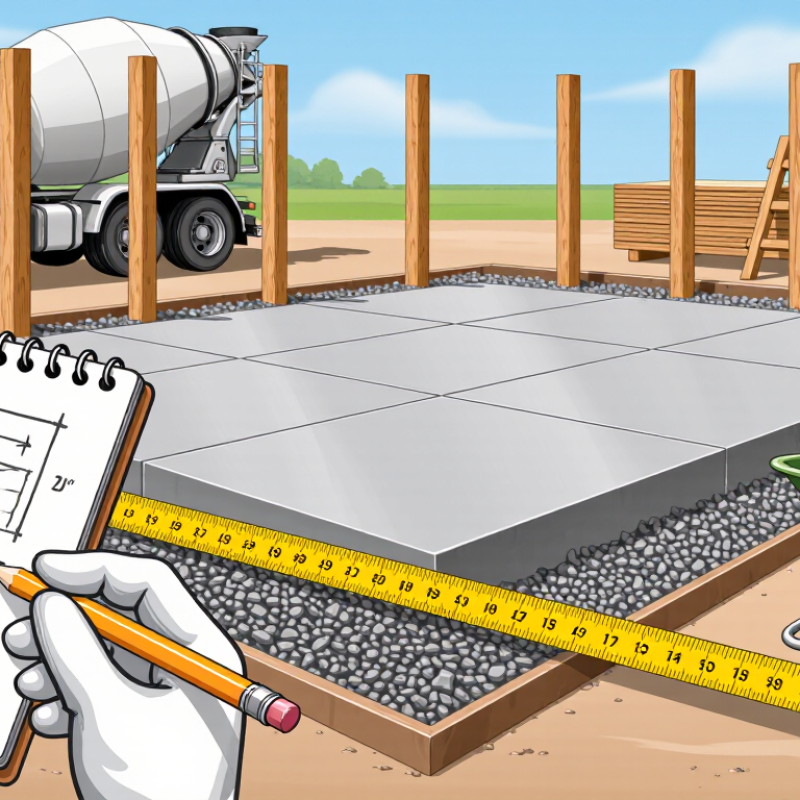
A concrete volume calculator is only as reliable as its measurements. Enter length, width, and depth using the same unit system. For a rectangular slab, multiply length by width by depth, then convert the result into cubic feet or cubic yards. A 12-foot by 10-foot slab with a 4-inch depth requires about 1.48 cubic yards. That depth must reflect the actual pour, not only the thickness at its edge.
Pour geometry can change the calculation quickly. Divide an L-shaped patio into rectangles, then add their volumes. For a round footing, use pi times radius squared times depth. Curved steps, sloped driveways, and thickened edges need separate sections. The American Concrete Institute’s ACI 304R guidance emphasizes accurate measurement and controlled placement because inconsistent dimensions can affect material requirements and performance. The National Ready Mixed Concrete Association also supports allowing additional concrete for waste, uneven subgrade, and delivery variation. A practical allowance is often 5–10 percent, although site conditions decide the final amount.
Be careful with average depth. A rough base can make a four-inch estimate misleading. I have seen calculations fail because one corner was six inches deep. Recheck every measurement, especially around forms and penetrations. The calculator gives a quantity, not a guarantee. A qualified contractor should verify complex geometry before ordering.
Convert Measurements to Consistent Units Before Calculating Volume
A concrete volume calculator is only as reliable as the measurements entered. Convert every dimension into one consistent unit before multiplying length, width, and depth. For example, a slab measuring 12 feet by 10 feet by 4 inches needs the depth converted to 0.333 feet. Its volume is about 40 cubic feet, or 1.48 cubic yards after dividing by 27. Mixing feet with inches can create a serious ordering error.
Metric work needs the same discipline. Convert millimeters to meters by dividing by 1,000, then calculate volume in cubic meters. NIST Special Publication 811 provides standardized conversion factors, which helps reduce rounding mistakes between measurement systems. This matters across a large industry: the USGS Mineral Commodity Summaries 2024 reported approximately 4.1 billion metric tons of cement production worldwide in 2023. Small calculation errors can therefore become costly at project scale. I still recheck every entry.
Measure the actual excavation, not only the drawing. Soil movement, uneven bases, and sloped forms can change the required quantity. Many site estimators allow roughly 5% to 10% for waste, but the right allowance depends on access, placement method, and finish quality. A calculator cannot detect a bowed form or a misplaced decimal. Before ordering, compare the result with the batch ticket, the form dimensions, and the planned placement area. That final comparison feels repetitive. It often catches the mistake.
Calculate Volume Using Cubic Feet, Cubic Yards, or Cubic Meters
A concrete volume calculator turns simple measurements into a practical material estimate.
Measure the length, width, and depth of the form. Keep every measurement in the same unit before calculating.
For a rectangular slab, multiply length × width × depth. If the measurements are in feet, the answer is cubic feet. For example, a 12-foot by 10-foot slab with a 4-inch depth needs depth converted to 0.33 feet.
Cubic yards are often useful for larger pours. Divide the cubic-foot result by 27, because one cubic yard contains 27 cubic feet. If your measurements are in meters, multiply the three dimensions directly to get cubic meters. A 6-meter by 3-meter area with a 0.1-meter depth equals 1.8 cubic meters.
Do not mix inches, feet, and meters in one calculation.
That mistake is surprisingly common.
For irregular shapes, divide the area into smaller rectangles, circles, or sections. Calculate each volume, then add the results.
A calculator can reduce arithmetic errors, but it cannot correct poor measurements. Check the form depth at several points, especially where the ground slopes.
Add a modest allowance for spillage, uneven excavation, and handling loss, usually around 5 to 10 percent. The exact allowance depends on site conditions.
Overestimating costs money; underestimating can interrupt a pour. Recheck the final unit before ordering. One missed conversion can change a manageable project into an expensive correction.
Apply 5–10% Waste Allowance for Spillage and Irregular Forms
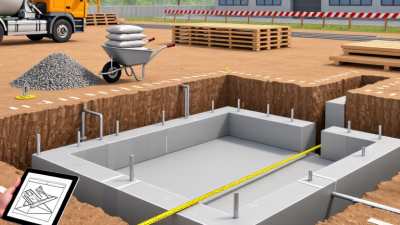
A concrete volume calculator turns measured dimensions into an estimated order quantity. Enter length, width, and slab depth in consistent units. For footings, use actual trench dimensions, not only the ideal drawing. I measure twice. Small errors become expensive quickly. Convert the result to cubic yards or cubic meters before ordering concrete. Check the calculator’s unit settings carefully. An inch-to-centimeter mistake can distort the estimate badly. For a rectangular slab, multiply length by width by depth. Complex forms need separate sections, including steps, thickened edges, and isolated pads. Add those results together.
Apply a 5–10% waste allowance for spillage, uneven ground, over-excavation, and irregular forms. A clean, level driveway may need about 5%. A rough trench or stepped footing often deserves 10%. Rain-softened soil can widen an excavation unexpectedly. Concrete may also remain in pump lines, wheelbarrows, or mixing areas. Multiply the calculated volume by 1.05 or 1.10, then round upward to the supplier’s ordering increment. Do not treat this allowance as a substitute for careful forming and measurement. I have seen estimates fail because a small slope was ignored. That mistake is easy to make. Review the site, formwork, access, and crew method before ordering. If the result looks unusually high or low, recalculate it manually and ask a qualified concrete professional to verify the assumptions.
How to Use a Concrete Volume Calculator?
Calculate the basic volume with length × width × depth, then add a 5–10% allowance for spillage, uneven ground, and irregular forms.
Example: A 6 m × 4 m × 0.10 m slab requires 2.40 m³ of concrete before waste. Ordering 2.52 m³ with a 5% allowance or 2.64 m³ with a 10% allowance provides additional coverage for practical site conditions.
Verify Results Using Concrete Density of About 2,400 kg/m³
How to Use a Concrete Volume Calculator?
Verify Results Using Concrete Density of About 2,400 kg/m³
A concrete volume calculator turns measured dimensions into a material estimate. Enter the slab’s length, width, and thickness in matching units. For example, a slab measuring 4 meters by 3 meters by 0.12 meters has a volume of 1.44 m³. Keep every measurement precise. A few millimeters can affect the order.
Density provides a useful reality check. Normal concrete commonly weighs about 2,400 kg per cubic meter. Multiply the calculated volume by this figure: 1.44 m³ × 2,400 kg/m³ equals approximately 3,456 kg. That result represents the concrete’s expected mass, not the exact delivery quantity. Add a reasonable allowance for spillage, uneven ground, and formwork movement.
Do not treat 2,400 kg/m³ as a fixed law. Aggregate type, moisture, air content, and mix design can change the actual density. A delivery ticket or laboratory test offers stronger evidence than a generic calculator. Check the units carefully. A thickness entered as 120 instead of 0.12 can create a serious error. I have seen estimates look convincing while hiding this simple mistake. The calculator helps, but measured dimensions and verified density deserve equal attention.