Concrete work often begins with a simple question: how much material is actually needed? A reliable cement calculator can turn dimensions into a practical estimate before ordering begins. That matters because the scale is enormous. The U.S. Geological Survey’s Mineral Commodity Summaries 2025 estimated global cement production at about 4.1 billion metric tons in 2024. Small calculation errors can therefore create costly waste across residential and commercial projects.
Consider a 4-meter by 3-meter slab, poured 0.1 meters deep. Its basic volume is 1.2 cubic meters. The calculator should then account for reinforcement, uneven ground, spillage, and a sensible waste allowance. Measure twice. Order once. However, cement and concrete are not the same material. Cement binds the mixture, while concrete also contains aggregates and water. A calculator must use the correct mix ratio, bag size, unit system, and local product guidance.
Professional judgment remains essential. The American Concrete Institute’s ACI 211 guidance supports proportioning concrete mixtures, while its structural standards help engineers select suitable strength and durability requirements. The Global Cement and Concrete Association’s 2050 Net Zero Roadmap also highlights the industry’s need to reduce material waste and emissions. These reports show why accurate estimating is more than a budgeting exercise.
A cement calculator provides an estimate, not a stamped design. That distinction is easy to miss. On site, rounded dimensions, moisture, and changing ground conditions can affect the final quantity. I still recheck every result manually, especially for foundations, thick slabs, and large pours. The number may look precise. The work rarely is.
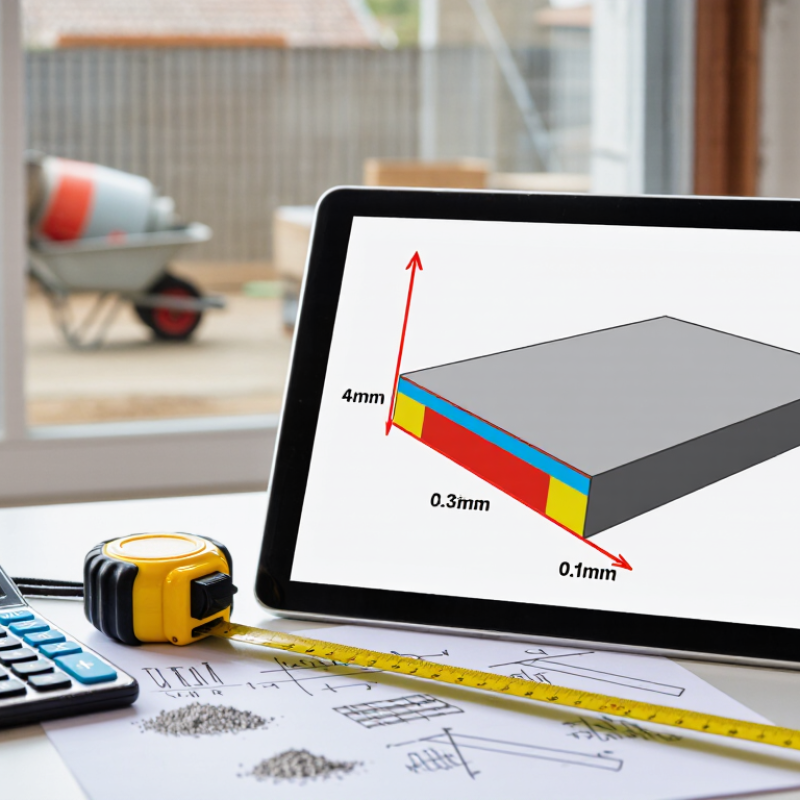
A cement calculator measures the materials needed for a planned concrete pour. It usually calculates volume, cement quantity, water, aggregates, and estimated waste. Start by entering length, width, and depth in consistent units. A slab measuring 5 by 4 metres, with a 0.1-metre depth, requires 2 cubic metres of concrete. The calculator then converts this volume into cement bags or kilograms. It does not measure soil strength, reinforcement, or workmanship. Those factors still require professional judgment.
The Global Cement and Concrete Association reports that the world uses roughly 14 billion cubic metres of concrete annually. Small calculation errors can therefore create substantial waste. The U.S. Geological Survey reported approximately 86 million metric tons of cement production in the United States during 2024. These figures show why accurate quantity planning matters. Most calculators include a waste allowance, commonly between five and ten percent. However, uneven ground may require more. My first estimate is rarely perfect.
Tips: Measure the actual formwork twice. Enter the cement mix ratio carefully. Check whether the calculator uses dry volume or finished concrete volume. Add waste only after confirming site conditions. Keep the final calculation for delivery and inspection records. A calculator provides an estimate, not a structural design. For load-bearing work, compare the result with project specifications and qualified engineering advice.
Before opening a cement calculator, gather accurate site dimensions and concrete requirements. Measure length, width, and depth at several points. Ground conditions are rarely perfect. Slopes, uneven edges, and compacted soil can change the required volume.
Record every opening, step, footing, slab, and column separately. Convert all measurements into one unit before calculating. A slab measuring 6 metres by 4 metres with a 0.12-metre thickness needs 2.88 cubic metres of concrete. Add a practical allowance for spillage and uneven excavation. Many contractors allow 5% to 10%, although this is a planning adjustment, not a universal code requirement. My first takeoff is often too optimistic.
Concrete volume is only part of the requirement. Confirm the specified strength, exposure conditions, slump, aggregate size, reinforcement, and placement method. A residential footing and an exterior driveway may need different performance characteristics. The Global Cement and Concrete Association reports that roughly 14 billion cubic metres of concrete are produced worldwide each year. The United States Geological Survey estimated global cement production at about 4.2 billion metric tons in 2024. These figures show the scale of material use, but they do not replace project specifications. Check the structural drawings and local requirements. Small mistakes matter. A calculator can multiply dimensions accurately, but it cannot detect a weak subgrade, missing reinforcement, or poor drainage.
A cement calculator is only as reliable as the measurements entered. Measure length, width, and depth at several points, especially where the ground slopes. Multiply the average dimensions, then convert every value into one unit. For a 4 m by 3 m slab with a 0.1 m thickness, the required volume is 1.2 cubic metres. Add about 5–10% for spillage, uneven bases, and leftover material. I still recheck this figure manually because one misplaced decimal can change the order considerably.
Material selection matters just as much. Cement is an ingredient, while concrete also contains water and aggregate. Mortar is different again and suits brick or block joints, not structural slabs. Use the specified strength, exposure conditions, aggregate size, and water-to-cement ratio from the project documents. ACI 211.1 provides established guidance for concrete mix proportioning, while ASTM C94 addresses ready-mixed concrete requirements. The USGS Mineral Commodity Summaries 2025 estimated global cement production at roughly 4.1 billion metric tons in 2024, showing the scale of this material’s use, but high volume does not replace correct proportioning.
Enter the measured volume, choose the correct mix category, and check whether the calculator reports cement, total concrete, or bag quantities. Bag yield varies by product and moisture conditions. That is easy to overlook. For load-bearing work, compare the calculator’s result with a qualified engineer’s specification, curing requirements, and local construction standards. A calculator helps with quantity; it does not verify soil capacity, reinforcement, or structural safety.
How to Use a Cement Calculator in 2026?
A cement calculator gives a practical starting point for estimating materials. Review its estimated cement quantity before ordering anything. Enter the slab’s length, width, and thickness carefully. Use consistent units throughout the calculation. A small input error can affect the final result. Check whether the tool estimates cement alone or the complete concrete mix. These figures are not interchangeable. The mix ratio, cement density, bag size, and dry-volume factor can change the result. I have seen estimates look precise while using the wrong thickness. That mistake is easy to miss.
Compare the calculator’s volume with your measured site dimensions. Measure uneven areas at several points, then use a realistic average. Add a modest allowance for spillage, surface variation, and handling losses. Avoid adding an excessive buffer without a reason. Too much cement increases cost and may not improve strength. Check the estimated quantity against the project’s specified mix design or an engineer’s guidance. Moist aggregate, poor compaction, and inconsistent batching can also affect performance. The calculator supports judgment; it does not replace it.
Tips: Recheck every unit before pressing calculate. Confirm the cement bag weight. Save the input values for later review. Round only after the calculation. For structural work, compare the estimate with approved technical requirements. If the result seems unusually high or low, measure again. That pause matters.
Sample quantity review using a nominal 1:2:4 concrete mix and a 5% material allowance
| Project Element | Length (m) |
Width (m) |
Thickness / Height (m) |
Concrete Volume (m³) |
Base Cement Estimate (kg) |
Calculator Estimate with 5% Allowance (kg) |
Calculated 40 kg Bags | Recommended Whole Bags |
|---|---|---|---|---|---|---|---|---|
| Residential floor slab | 4.00 | 3.00 | 0.10 | 1.20 | 380.2 | 399.2 | 9.98 | 10 |
| Small reinforced footing | 2.00 | 0.80 | 0.25 | 0.40 | 126.7 | 133.1 | 3.33 | 4 |
| Outdoor walkway | 8.00 | 1.20 | 0.10 | 0.96 | 304.1 | 319.3 | 7.98 | 8 |
| Concrete column | 0.30 | 0.30 | 3.00 | 0.27 | 85.5 | 89.8 | 2.25 | 3 |
| Garden retaining wall base | 3.00 | 0.50 | 0.20 | 0.30 | 95.0 | 99.8 | 2.49 | 3 |
| Small concrete pad | 2.50 | 2.00 | 0.12 | 0.60 | 190.1 | 199.6 | 4.99 | 5 |
Calculation method: Concrete volume = length × width × thickness or height.
Mix assumption: A nominal 1:2:4 cement:sand:coarse aggregate mix by volume, using an approximate cement requirement of 316.8 kg per cubic metre of finished concrete.
Allowance: The calculator estimate includes 5% for handling loss, uneven surfaces, minor spillage, and measurement variation.
Bag conversion: Calculated bags = estimated cement quantity ÷ 40 kg. Always round up to a complete bag and confirm the required concrete strength with the project specification.
A cement calculator gives a useful estimate, not a guaranteed order quantity. Enter the slab’s length, width, and thickness using one unit system. Check the result manually with volume calculations. Length multiplied by width, then multiplied by depth, should match the calculator’s base volume. Small errors compound. Measure twice.
Review the calculator’s assumptions before accepting its output. Some tools estimate cement only, while others calculate the full concrete mix. Confirm the required mix ratio, cement bag weight, and yield from current technical information. I also compare the result with a simple worksheet.
A calculator once produced a neat answer for an uneven footing, but the site clearly needed more material. The number looked professional. It was still incomplete.
Add a waste allowance after checking the actual conditions. A level, accessible slab may need about five percent extra. Irregular forms, sloped ground, spillage, difficult access, or hand mixing may justify a higher allowance. Do not hide poor measurements inside excessive waste.
Inspect the excavation, formwork, and subgrade before ordering. Wet soil can collapse an edge, while rough forms can increase depth. Record the measured depth at several points, then use the average or the greater safe value when appropriate.
Recheck the calculation after each design change. Calculators help with decisions, but site evidence must have the final influence.