A cement calculator can turn a rough plan into a practical material estimate. Enter the slab’s length, width, and depth, and the tool converts those measurements into volume. Some calculators also estimate cement bags, concrete mix, or delivery quantities. That distinction matters: cement is an ingredient, while concrete is the finished mixture of cement, aggregate, and water. Check what the calculator measures before relying on its result.
Accuracy starts at the formwork, not the screen. Measure in consistent units, confirm the finished depth, and account for steps, thickened edges, or irregular corners. A small error across a wide patio can add up quickly. Then allow for waste based on the project and placement conditions; do not treat one percentage as right for every pour. The estimate is a planning aid, not a substitute for product instructions or professional advice on structural work. One important sourcing note: no verifiable quotation from a named cement-calculator expert was provided, so this introduction does not invent one. That is worth keeping in mind. Real measurements still matter more than a confident-looking number.
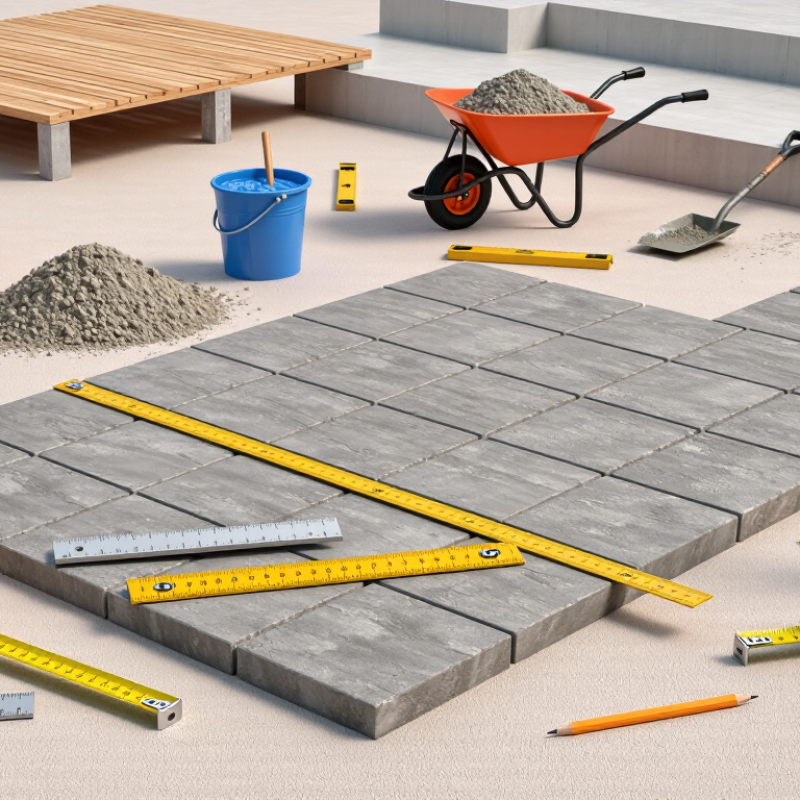
A cement calculator converts measured dimensions into an estimated material quantity. For a slab, you enter its length, width, and thickness; for a footing, you enter its shape and dimensions. The tool calculates volume, often in cubic feet or cubic yards, then estimates the required mix or cement bags. That matters. Cement is only one ingredient in concrete, which also contains sand, aggregate, and water.
Use a calculator before buying materials for a patio, path, post footing, or small floor. Say a slab measures 10 by 12 feet and is 4 inches thick. Its volume is about 1.48 cubic yards before any allowance for waste. A calculator can make that conversion quickly, especially when measurements use mixed units. Check the units twice. Small errors grow.
Treat the result as a planning estimate, not a guaranteed order quantity. Uneven ground, formwork gaps, spillage, and the actual mix yield can change what you need. Add a modest allowance when appropriate, and compare the calculator’s assumptions with the product yield listed on the bag. I would also remeasure the site before purchasing; it is easy to trust a neat number more than a crooked tape measure.

A reliable cement estimate starts with exact measurements and a clear description of the work. For a rectangular slab, record length, width, and finished thickness; measure in one unit system. For steps, footings, or irregular areas, divide the job into simple shapes and calculate each separately. Note openings, sloped ground, and any changes in depth. Small errors compound. A shallow edge or uneven base can change the order quantity.
A volume estimate is not automatically a cement-bag estimate. Concrete contains cement, water, and aggregates, and the required cement content depends on the specified mix. ACI 211.1 provides guidance for proportioning concrete mixtures, so use the project’s mix specification rather than guessing a universal ratio. The U.S. Geological Survey’s Mineral Commodity Summaries 2024 estimated U.S. cement production at 91 million metric tons in 2023. That scale makes careful material planning practical, even for a small pour.
Tips: Write down dimensions beside a sketch, including thickness at several points. Check units before entering numbers. Add a reasonable allowance for spillage or uneven forms, but base it on site conditions. I still recheck depth last; it is easy to overlook.
Compare estimated concrete volume for common slab areas at 4-inch and 6-inch thicknesses. Estimates include a 10% allowance for waste.
Estimate basis: slab area × thickness in feet ÷ 27 = cubic yards; then add 10% for waste. Actual requirements depend on measured dimensions, site conditions, and the project design.
A cement calculator begins with geometry, not a guess at the number of bags. Enter length, width, and thickness, then convert the result into cubic feet or cubic yards. For a 10-by-12-foot slab, 4 inches thick, the volume is about 1.48 cubic yards. Add a 10% allowance for spillage and uneven ground, and the order estimate becomes roughly 1.63 cubic yards. Small errors matter. A one-inch thickness mistake across this slab changes the volume by about 0.37 cubic yards.
That volume is concrete, not pure cement. Turning it into cement, sand, and aggregate quantities requires a mix design. ACI 211.1-22 guidance accounts for strength, workability, aggregate properties, and water-to-cementitious-material ratio; one fixed recipe cannot suit every job. The U.S. Geological Survey’s Mineral Commodity Summaries 2025 reports U.S. cement production of about 86 million metric tons in 2024, reflecting an industry where quantities are routinely measured at scale. Still, a calculator can feel exact; it isn’t. Check units, slab depth, site conditions, and the supplier’s mix specifications before ordering.
| Project | Dimensions (L × W × D/H) | Concrete Volume | Volume with 10% Allowance | Cement Bags (50 kg) | Sand | Coarse Aggregate |
|---|---|---|---|---|---|---|
| Concrete slab | 4.00 × 3.00 × 0.10 m | 1.200 m³ | 1.320 m³ | 9 bags | 0.581 m³ | 1.162 m³ |
| Garden path | 6.00 × 1.00 × 0.10 m | 0.600 m³ | 0.660 m³ | 5 bags | 0.290 m³ | 0.581 m³ |
| Isolated footing | 0.80 × 0.80 × 0.25 m | 0.160 m³ | 0.176 m³ | 2 bags | 0.077 m³ | 0.155 m³ |
| Concrete column | 0.30 × 0.30 × 3.00 m | 0.270 m³ | 0.297 m³ | 2 bags | 0.131 m³ | 0.261 m³ |
| Stair landing | 2.00 × 1.50 × 0.15 m | 0.450 m³ | 0.495 m³ | 4 bags | 0.218 m³ | 0.436 m³ |
| Driveway section | 5.00 × 3.00 × 0.12 m | 1.800 m³ | 1.980 m³ | 13 bags | 0.871 m³ | 1.742 m³ |
To compare cement calculators in 2026, enter identical measurements into each one. Use the same units, slab length, width, depth, and mix ratio. Then check whether each tool explains its assumptions. A reliable calculator should distinguish cement from the full concrete mix and show how it converts volume into material quantities. If it gives only a bag count, accuracy is harder to judge.
Try a realistic example: a patio measuring 12 by 10 feet, with a 4-inch depth. Compare the estimated volume before comparing bag totals. Small differences matter. Check whether a calculator includes waste, rounds up partial bags, or assumes a particular bag size.
Measure depth at several points; ground is rarely as even as a sketch suggests. For steps, footings, or curved edges, calculate separate sections rather than forcing one simple shape. I’ve found that this extra step can expose misleading estimates, though it takes longer.
No calculator can correct a poor measurement. Keep a little margin for uneven forms and spills, but avoid adding a large, unexplained buffer. If two results differ sharply, review the units and stated assumptions before choosing either figure.
Before trusting a cement calculator, verify the dimensions on site. Measure length and width, then confirm the planned thickness at several points. Convert the final volume into the units your supplier uses. Small errors compound. Recheck openings, sloped edges, and uneven subgrade; a neat drawing may not match the ground.
Waste is worth measuring, not guessing. The U.S. Environmental Protection Agency’s 2018 construction and demolition materials report estimated 600 million tons of debris generated, with 455 million tons directed to further use. That broader figure is not concrete-only, but it shows why excess material matters. Add a modest contingency only after checking formwork, access, and ground conditions. The U.S. Geological Survey’s Mineral Commodity Summaries 2025 estimated domestic cement production at about 86 million metric tons in 2024, underscoring the scale of material moving through the industry.
For delivery, match the order to the pour sequence and confirm truck access, unloading space, and the supplier’s schedule. A calculator cannot see a narrow gate or a soft driveway. Share the measured volume and site constraints when requesting a delivery estimate. Keep a written note of assumptions; one thickness guess may still be wrong. Recheck it.